A burger earns its reputation in the first bite. If the bun collapses, the filling slides out or the patty tastes more steamed than seared, no amount of menu copy can save it. Guests may enjoy an impressive photograph, but they remember whether the thing was actually good to eat.
For cafés, pubs and restaurants, burgers can be reliable volume sellers with useful margin. They can also clog a grill and turn the pass into a tower-building competition. The practical goal is a clear flavour, sensible proportions and a station that can produce several orders together.
Give the Burger a Clear Point of View
Start with the venue. A neighbourhood café may need a clean lunch burger that travels well; a pub can support a larger plate and beer-friendly seasoning; a hotel bar may favour a tighter presentation. Copying every current topping produces a confused build rather than a signature.
Write the flavour brief in one sentence. Beef, cheese, pickles and a sharp house sauce is enough direction. Every addition should bring salt, acidity, heat, crunch or moisture in balance. If it only adds height, it is making the guest’s job harder.
Season, Sear and Rest With Purpose
Set patty weight and diameter to suit the bun after cooking, not before. A thick ball inside a wide bun creates empty bites; a thin oversized patty dries at the edges. Keep handling light so the texture remains tender rather than springy.
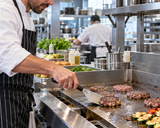
Use a hot, clean cooking surface and give the meat room to sear. Season consistently and follow an approved doneness and food-safety method. Cheese should melt while the patty finishes, then the meat needs only a brief rest—long enough to settle, not cool.
The Bun Is Structural Equipment
A bun must match the weight, moisture and service format of the filling. Soft brioche can suit a neat build but collapse under heavy sauce. A firmer milk bun or potato roll may travel better. Test supply consistency as closely as the meat.
Toast the cut faces for flavour and a moisture barrier. Sauce to the edge without soaking the crumb, and keep very wet ingredients under control. The bottom bun usually fails first, so build with that journey in mind.

Layer for the Bite, Not the Photograph
Distribute pickles, onion and sauce so every bite gets some. Lettuce can add crunch and help manage moisture; tomato needs flavour and a set thickness. Bacon should be crisp enough to break cleanly rather than dragging the rest of the filling out with it.
Limit the permanent variations. A chicken burger, vegetarian option and one house beef burger may serve the menu better than eight near-identical builds. Share buns, sauces and garnishes where it makes sense, but give each option a reason to exist.
Design the Line Around Multiple Orders
Stage buns, portion patties and garnishes, and arrange the bench in build order. Grill capacity is only one part of the equation; toasting, chip production and wrapping often become the real bottlenecks. Time five mixed orders, not one quiet sample.
Use an approved build photograph and mark sauce measures. During the rush, generosity can drift wildly between cooks. Clear standards protect the guest and the margin while reducing the need for a supervisor to inspect every bun.
Test the Burger After Fifteen Minutes
Wrap and box a full order, include the chips, wait the average journey and eat it. Check steam, sauce migration and bun strength. Ventilation and component placement often improve travel more than a thicker package or a longer grill time.
A responsive commercial grill or griddle supports searing and recovery, but good numbers finish the job. Cost patty yield, cheese, sauce, sides, packaging and common modifications. The profitable burger is the one the kitchen can repeat without waste.
Modifications deserve their own audit. Gluten-free buns, extra patties, no sauce and added egg can alter timing, structure and margin. Decide which changes the kitchen can support, cost the common ones and make the till buttons clear. A request should not arrive as a handwritten puzzle during the rush. Where an alternative build behaves differently, photograph it as well; consistency should not disappear as soon as a guest asks for one change.
The takeaway
A better burger has a clear flavour, a patty and bun that fit, toppings distributed for every bite and a build that survives real service. Keep the station logical, test takeaway honestly and resist unnecessary height. Guests should need a napkin, not an engineering degree.