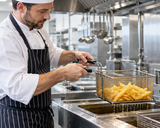
The sound of a fryer basket dropping is part of the rhythm of countless Australian kitchens. Chips, calamari, arancini and fried chicken can move quickly, travel well and deliver the crunch guests expect. When the station is working properly, it is one of the most dependable parts of service.
When it is not, the clues arrive quickly: pale crumb, greasy batter, chips that soften before the plate reaches the table and oil that smells tired halfway through the week. Better frying is not about chasing novelty. It is about controlling temperature, moisture, load size and the small habits that protect every batch.
Crisp Food Starts With Moisture Control
Hot oil drives moisture from the food and sets the coating around it. If the surface is wet, the batter is too heavy or the fryer temperature collapses, steam cannot escape cleanly. The result absorbs more oil and loses the brittle finish that makes deep-fried food worth ordering.
Dry seafood and vegetables before coating, keep chilled products cold until required and standardise the thickness of every cut. A crisp result is built during preparation, not rescued in the basket. Even the best fryer cannot make two very different portion sizes finish together.
Treat Oil as an Ingredient
Oil carries flavour from one batch to the next. Crumbs, flour and loose marinades burn, darken the tank and shorten usable life. Skim throughout service, filter on a written schedule and top up with fresh oil according to the manufacturer’s directions rather than waiting for colour alone to make the decision.
Keep strongly flavoured items separate where the menu demands it. Fish, sweet dough and gluten-free products can create quality or allergen problems when they share a tank. Record oil changes and filter checks; memory becomes surprisingly optimistic at the end of a busy Saturday.
Capacity Matters More Than Basket Size
A basket may physically hold another handful of chips, but the fryer still has a recovery limit. Overloading drops the oil temperature, extends cooking time and encourages staff to compensate by leaving food in longer. That is how a fast station becomes a queue with increasingly dark results.
Test realistic orders during setup: two baskets of chips plus calamari, not one perfect sample at 10 am. If recovery is slow, adjust batch size, staging or equipment capacity. The right commercial fryer should suit peak demand, not the average hour on the roster.

Make Safety Part of the Workflow
Water and hot oil are a dangerous combination, so the fryer station needs clear landing zones for raw product, baskets and finished food. Floors must stay dry, handles must remain inside the working footprint and staff need a safe method for filtering and cleaning when the oil has cooled appropriately.
Ventilation and fire protection are not decorative extras. Follow equipment instructions and local safety requirements, and never improvise around a smoking fryer. A well-planned station also reduces frantic crossing between the freezer, prep bench and pass—the sort of movement that creates accidents during peak trade.
Measure What Leaves the Basket
Cost the cooked yield, oil, coating, sauce and waste rather than the raw item alone. A generous free-pour of chips can erase margin faster than a chef expects. Use a consistent scoop or weighed portion, then check what guests leave behind before assuming bigger always looks better.
Reliable commercial deep fryers support recovery, filtration and repeatability, but the daily system still belongs to the team. Taste the first batch, inspect the oil during service and make the cleaning standard visible. Crunch is a promise guests notice straight away.
The takeaway
Deep frying earns its menu space when the kitchen controls moisture, temperature, oil condition and load size. Keep the station focused, test food in its real service format and write the routine down. The reward is food that arrives crisp, a team that moves safely and an oil bill that stays under control.