Few dishes expose a pub kitchen quite like chicken parmigiana. Guests know the version they want: crisp crumb, juicy chicken, tomato with some life in it and cheese that is properly melted rather than merely pale and warm. Chips need to stay crisp and the salad cannot feel like an apology.
The dish looks simple because every component is familiar. During a busy service, however, frying, saucing, topping, melting and plating can pull several parts of the line into one order. The answer is not a bigger pile of cheese. It is a tighter method with clear portions and sensible staging.
Consistency Begins Before the Crumb
Use chicken portions of a defined weight and bring them to an even thickness without turning the edges to paste. Thick centres and thin tails do not finish together. Trim neatly, keep the meat cold and separate raw preparation from the cooked-food side of the station.
Season the chicken itself. Crumb adds texture, not a free pass for bland meat. A light flour coat, complete egg coverage and an even crumb create better adhesion. Press enough to set the coating, then allow it to rest briefly so it does not shed across the fryer.
Fry for Colour, Texture and Recovery
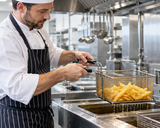
Whether the schnitzel is shallow-fried or deep-fried, the fat must recover between batches. Crowding produces pale, oily crumb and slows the station. Drain on a rack rather than a flat tray so steam can escape from both sides before sauce is added.
Some kitchens cook through in the fryer; others colour first and finish in the oven. Either method can work when food-safety controls and timing are documented. What does not work is stacking cooked schnitzels, trapping steam and hoping the grill will crisp them later.
More Topping Is Not Always Better
The tomato sauce should be reduced enough to stay on the chicken and seasoned brightly enough to cut through crumb and cheese. Apply a measured amount through the centre, leaving a small crisp border. Flooding the entire surface guarantees a soft base before the plate leaves the pass.
Choose cheese for flavour and melt, then portion it. A blend can give stretch, browning and savoury depth without relying on a thick blanket. Melt under a salamander or in an oven with enough heat to colour quickly; a long slow melt keeps cooking the chicken.

Balance the Pub Classic
Chips remain the natural partner, but portion them consistently and keep them away from sauce. A simple dressed salad should bring acidity and crunch, not arrive undressed beneath the hot chicken. The full plate needs generosity without becoming a dare.
Variations such as ham, eggplant, chilli or smoked cheese can create useful upsells, provided the base method stays recognisable. Limit the number of versions. A menu of eight parmas can turn one efficient station into eight separate mise en place problems.
Stage the Work Without Holding the Finish
Portion and crumb in controlled batches, keep sauce hot and cheese measured, then organise the station in pickup order. The cook should not cross the kitchen for salad or search for a clean tray while the schnitzel drains. Small layout decisions save minutes over a full service.
Test a realistic run of multiple orders alongside the rest of the menu. Watch where fryer, oven and salamander demand collide. If every parma blocks another dish, adjust staging or capacity before marketing drives more orders into the bottleneck.
Match Equipment to Peak Demand
A dependable commercial fryer, fast salamander and even oven make volume easier to control. Extraction, safe landing space and refrigeration near the station matter just as much as raw power.
Cost chicken yield, crumb, frying oil, sauce, cheese, sides and common extras. Then inspect returned plates. If chips disappear and half the chicken comes back, the portion is not generous—it is wasteful. A better-sized plate with excellent texture usually leaves the stronger impression.
Ask the floor team what guests actually say about the dish, not only whether it sells. Comments about size, dryness, cheese coverage or chips arriving soft point directly to the part of the method that needs attention. A popular item can hide inconsistency because people keep ordering it anyway. Fixing those details protects reputation and reduces remakes before a poor review turns an ordinary service problem into a public one.
The takeaway
A better chicken parmigiana is built on even chicken, crisp crumb, measured sauce and cheese, then finished with enough heat to move quickly. Give every component a standard and the dish becomes easier to cook, easier to cost and far more likely to arrive as the guest imagined it.