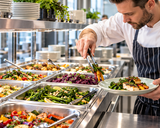
A modern menu has to do several jobs at once. It must give guests enough choice, protect margin, move cleanly through the kitchen and remain easy for staff to explain. Adding more dishes rarely solves all four. The stronger approach is to design variety from a controlled set of ingredients and processes.
The menu trends with the greatest staying power are therefore operational as well as culinary: flexible bases, shareable formats, plant-forward choices, premium alcohol-free drinks and clear value. Each can improve the guest experience when it is built around the kitchen rather than added on top of it.
Start with clarity, not maximum choice
Guests want to understand what a venue does well. A shorter, purposeful menu can create more confidence than a long list of loosely connected dishes. It also gives the kitchen a better chance of buying accurately, training consistently and protecting quality through busy periods.
Map the menu by occasion and need: light or substantial, familiar or exploratory, individual or shared, quick or considered. Gaps become visible without assuming that every category needs several options.
Five menu patterns worth keeping
1. Plant-forward mains. Vegetables, grains and legumes can create complete dishes with strong texture and margin. 2. Shareable plates. Flexible ordering suits groups and helps guests control spend. 3. Premium alcohol-free drinks. House-made flavour and deliberate presentation can create a profitable new occasion.
4. Familiar formats with global flavour. Bowls, sandwiches, grills and snacks provide an accessible base for fermented sauces, spices and regional ingredients. 5. Tiered value. Entry choices, add-ons and premium upgrades give guests control without forcing blanket discounting.

Engineer variety from shared ingredients
| Shared component | Possible uses | Control point |
|---|---|---|
| Roasted vegetables | Main, side, bowl, sandwich | Batch size and holding |
| House dressing | Salad, grain bowl, finishing sauce | Measured recipe and portion |
| Slow-cooked protein | Plate, roll, snack, add-on | Yield and regeneration |
| Seasonal fruit | Dessert, breakfast, drink | Ripeness and waste |
Shared ingredients only create efficiency when storage, preparation and service remain clear. Avoid forcing one component into dishes where it does not improve flavour or value.
Design every idea for service
A menu item is not finished when the recipe tastes good. Define where it is stored, which station owns it, the portion tool, the pickup sequence and what happens during peak demand. Test the dish beside the rest of the menu, not in isolation.
Front-of-house also needs language that is brief and useful. Lead with the main ingredient, cooking method and flavour. Trend labels can follow, but the guest should understand what will arrive without needing a translation.
Measure more than food cost
Food cost matters, but so do labour, waste, pickup time, equipment use and the effect on other orders. A dish with a slightly higher ingredient percentage may be valuable if it is fast, distinctive and drives a profitable drink. Another may look attractive on paper but block a station at peak time.
Review sales mix and contribution alongside plate waste and modifications. If guests repeatedly remove an element or staff quietly simplify the presentation, the official specification is not surviving service.
Match equipment to the menu you want to run
Equipment capacity should reflect the combined menu, expected covers and peak production method. Flexible equipment can support shared components across dayparts, but only when tray capacity, recovery and workflow are planned together.
Explore ICE Group’s commercial ovens and combi steam ovens, or speak with the team about equipment and layout for a more efficient menu.
Create a menu review rhythm
Do not wait for a full redesign to remove friction. Review one section at a time using a consistent set of questions: What sells? What contributes? What creates waste? What slows the kitchen? What do guests struggle to understand? Small regular decisions keep the menu healthier than a dramatic annual overhaul.
Include purchasing, kitchen and front-of-house perspectives. A strong seller may depend on an unreliable ingredient; a profitable dish may be difficult to explain; a slow seller may be placed or named poorly. Looking across the operation prevents one metric from deciding the result.
When a dish changes, update every point of truth together: recipe, costing, allergen information, prep list, menu description, photography and staff briefing. Consistency behind the scenes is what makes a simplified menu feel effortless to the guest.
The takeaway
The best menu trends make the venue easier to choose and the kitchen easier to run. Build variety from shared ingredients, give guests clear value, test every dish under pressure and measure the effect on the whole service—not only the popularity of one plate.