Food trends move quickly, but hospitality investment cannot. A restaurant can trial a new sauce in a week; changing equipment, suppliers and kitchen workflow is a much bigger commitment. The useful question is not “what is trending now?” but “which shifts solve a lasting customer or operational need?”
For Australian restaurants, hotels and cafés, the strongest global food movements tend to share three qualities: guests understand the benefit, the kitchen can execute them consistently, and the idea can evolve without losing its relevance. This is a practical framework for separating durable menu opportunities from short-lived noise.
Is it a trend, or a durable customer signal?
A viral ingredient can create attention, but attention alone does not produce repeat orders. Durable shifts usually connect to a broader need: stronger value, more choice, cultural discovery, convenience, moderation, transparency or a desire for food that feels less processed.
Watch behaviour rather than hashtags. Are guests asking for the format? Are suppliers expanding the range? Can the idea work across several seasons and price points? If the answer is yes, the trend may be expressing a longer-term change.
Six global food shifts with staying power
1. Plant-forward, not plant-only. Vegetables, grains and legumes are increasingly treated as the centre of a satisfying dish rather than a substitute. 2. Fermented depth. Kimchi, miso, gochujang, pickles and cultured ingredients bring concentrated flavour and prep-ahead potential.
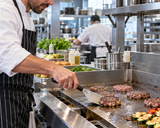
3. Global comfort food. Guests remain open to new flavours when the format is familiar: dumplings, noodles, sandwiches, rice bowls and grilled dishes. 4. Fire and smoke. Char, roasting and wood-fired cues communicate craft and intensity.
5. Premium alcohol-free drinks. Adult flavour, thoughtful presentation and food pairing create value beyond soft drink. 6. Ingredient transparency. Clear sourcing, seasonal produce and recognisable ingredients can be more persuasive than broad sustainability claims.

Where these shifts can fit on the menu
| Shift | Low-risk entry point | Measure |
|---|---|---|
| Plant-forward | One composed main or share plate | Sales mix and add-ons |
| Fermented flavour | Glaze, dressing or condiment | Guest acceptance and prep time |
| Alcohol-free | Two signature drinks | Attachment rate and margin |
| Global comfort | Limited-time special in a familiar format | Repeat orders and feedback |
Test the idea before rebuilding the menu
Begin with one item and a defined trial period. Set a target portion cost, pickup time and sales result before launch. Brief front-of-house on the exact guest benefit, then collect feedback that is more useful than “did you like it?” Ask whether the description matched the experience, whether the portion felt right and whether they would order it again.
Review waste and station impact after the first busy service. An idea that performs well at lunch but slows dinner may need a different format rather than immediate removal.
Protect the kitchen workflow
New ingredients should ideally work across more than one dish, but each use must feel intentional. Build around shared bases, sauces and cooking processes. Avoid adding a single-use garnish or appliance unless the demand is proven. The most resilient menu innovation often comes from recombining capabilities the kitchen already has.
Write the production method before launch: supplier, yield, storage, batch size, portion tool, finishing step and shelf-life control. That turns a creative idea into something every shift can execute.
Let menu strategy guide equipment decisions
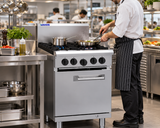
Equipment should support several revenue-generating uses, not one fashionable dish. Flexible ovens, combi ovens, grills, refrigeration and prep systems can make trend testing easier because the kitchen can adjust formats without adding a separate station.
Explore ICE Group’s commercial ovens and combi steam ovens, or speak with the team about equipment that can adapt as your menu changes.
Create a regular review rhythm
Trend management works better as a scheduled menu discipline than a rush of reaction. Review sales mix, guest feedback, supplier changes and station performance at set intervals. Keep a short watchlist of ideas, but limit live tests so the team can learn from each one.
Supplier conversations are useful here. Ask what is becoming more consistently available, which ingredients have stable specifications and where costs are volatile. A promising flavour is easier to build into an evergreen dish when the product can be sourced reliably and the team understands its handling requirements.
Finally, separate a seasonal feature from a permanent menu decision. A short promotion can create urgency and content, while a permanent item needs repeat demand, stable supply and a role in the wider menu. Both can be successful when they are judged by the right standard.
The takeaway
The most useful food trends are not predictions; they are signals of what guests value. Choose ideas that fit your venue, test them in a controlled format and measure the effect on sales, service and waste. If the dish survives real service and earns repeat orders, it has moved beyond trend status.