Native by Nature: Bringing Wattleseed and Finger Lime Onto Your Menu
- Sep 09, 2026
- 0 Comments
Native Australian ingredients have quietly moved from garnish to headline act. What started as a fine-dining flourish — a scattering of finger lime pearls on a $220 tasting menu — is now showing up in suburban cafés, regional pubs and CBD bistros alike. For operators, that shift matters commercially, not just creatively: a native-ingredient dish gives you a point of difference no imported trend can replicate, a genuine provenance story to put on the menu, and produce that's grown here, so it's less exposed to the supply shocks hitting imported specialty goods.
This spotlight breaks down one signature dish built around two of the most versatile native ingredients — wattleseed and finger lime — along with a café-scale adaptation, a wine and non-alcoholic pairing, and the practical sourcing and costing questions you'll want answered before it goes anywhere near a menu reprint.
Why These Two Ingredients
Wattleseed
Wattleseed is roasted and ground from native acacia seed. It carries a deep, coffee-and-hazelnut flavour that works equally well in a savoury crust or a baked good, which is exactly why it travels so easily between a restaurant main and a café pastry case.
Finger lime
Finger lime — sometimes called citrus caviar — brings small, bursting pearls of sharp acidity. It's the kind of ingredient that lifts a rich dish without needing a heavy sauce, and it photographs well, which doesn't hurt on a menu that lives partly on Instagram.
Both are grown commercially in Australia, both have a shelf-stable form (ground wattleseed, and frozen or jarred finger lime pearls when fresh isn't in season), and both let you tell a one-line story on the menu about where they come from — which is increasingly what diners are asking for.
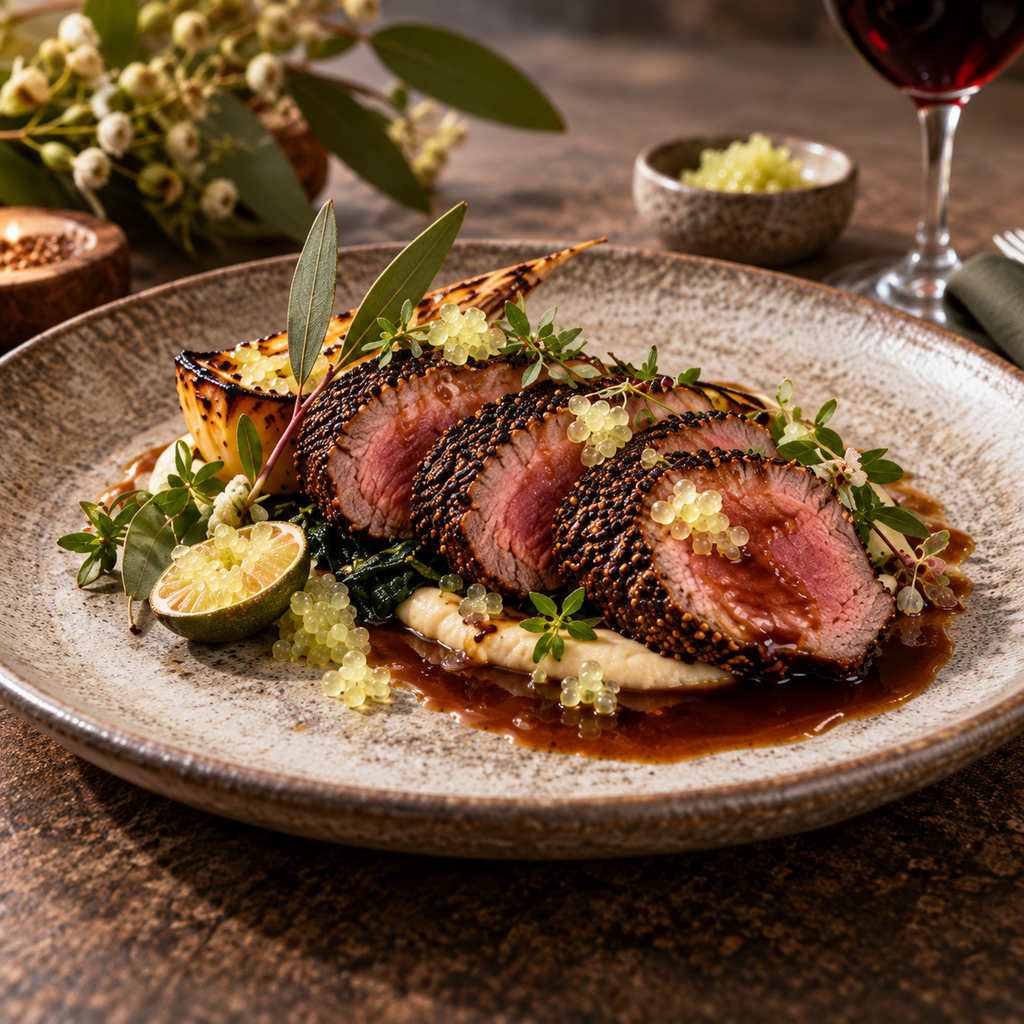
The Signature Dish: Wattleseed-Crusted Lamb Backstrap with Finger Lime and Native Thyme Jus
Serves 4 (restaurant main)
Ingredients
- 4 x 180g lamb backstraps, trimmed
- 2 tbsp ground wattleseed
- 1 tbsp cracked black pepper
- 1 tsp sea salt
- 2 tbsp macadamia oil (or light olive oil)
- 300ml lamb or beef stock
- 1 tbsp native thyme (or regular thyme if unavailable), finely chopped
- 1 finger lime, pearls removed
- 1 tbsp cold butter, cubed
- 1 tsp honey
Method
Combine ground wattleseed, cracked pepper and salt. Press evenly onto both sides of the lamb backstraps.
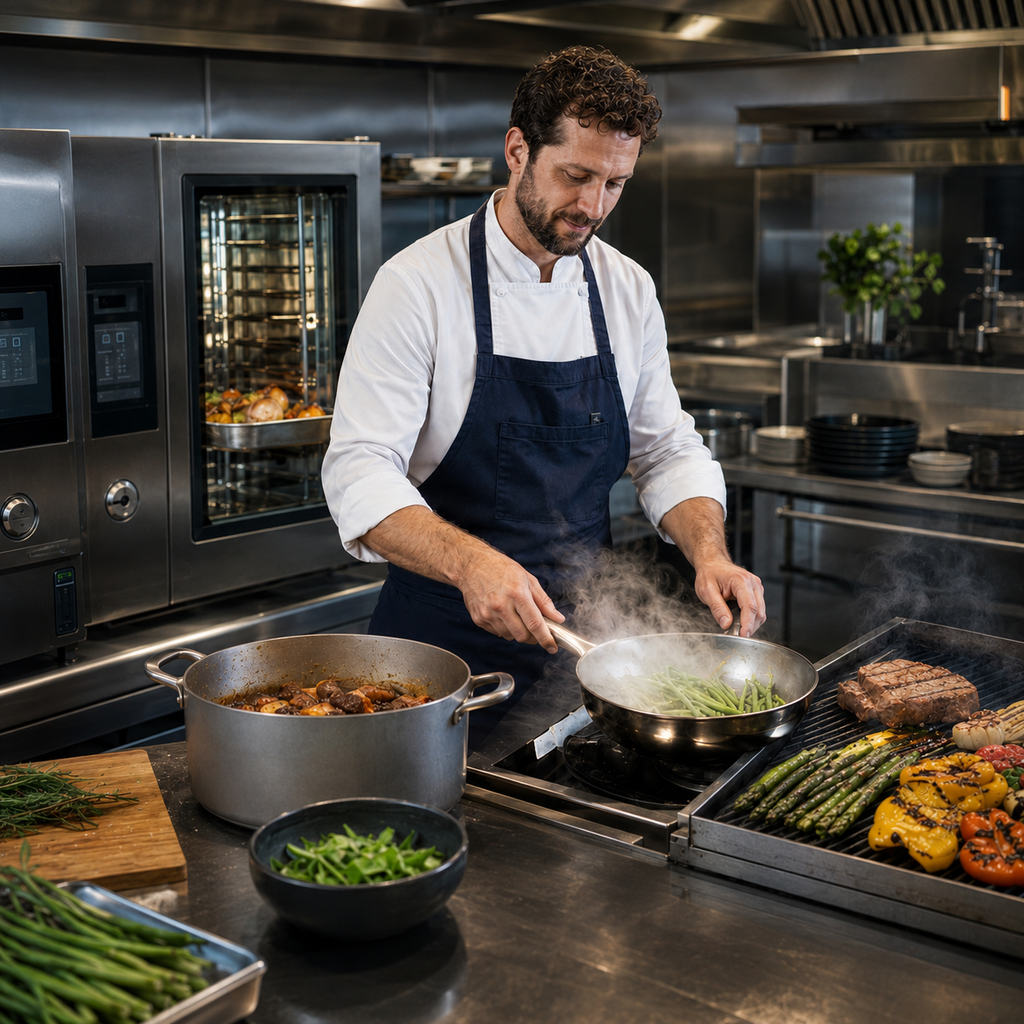
Heat macadamia oil in a heavy pan over medium-high heat. A high-output gas cooktop or induction cooktop gives you the fast, even heat needed to get a clean crust on the wattleseed without scorching it. Sear the lamb 2–3 minutes per side for medium-rare, then rest for 5 minutes, tented in foil.
Deglaze the pan with the stock, scraping up the crust. Add native thyme and honey, and reduce by half over medium heat (roughly 6–8 minutes).
Remove from heat, whisk in the cold butter a cube at a time to gloss the jus, then fold through the finger lime pearls at the very end so they stay bright and don't cook out.
Slice the backstrap on an angle, spoon over the jus and pearls, and finish with a light dusting of extra wattleseed.
Café Adaptation: Wattleseed Damper Scrolls with Whipped Ricotta and Finger Lime

For a café or bakery case rather than a plated main, swap the format entirely: fold ground wattleseed into a simple damper or scone dough, bake in individual scrolls, split and serve warm with whipped ricotta and a spoonful of finger lime pearls (or a quick finger lime and honey syrup if fresh fruit isn't available). It uses the same two hero ingredients, keeps the story consistent across your all-day menu, and works at café margins rather than restaurant ones.
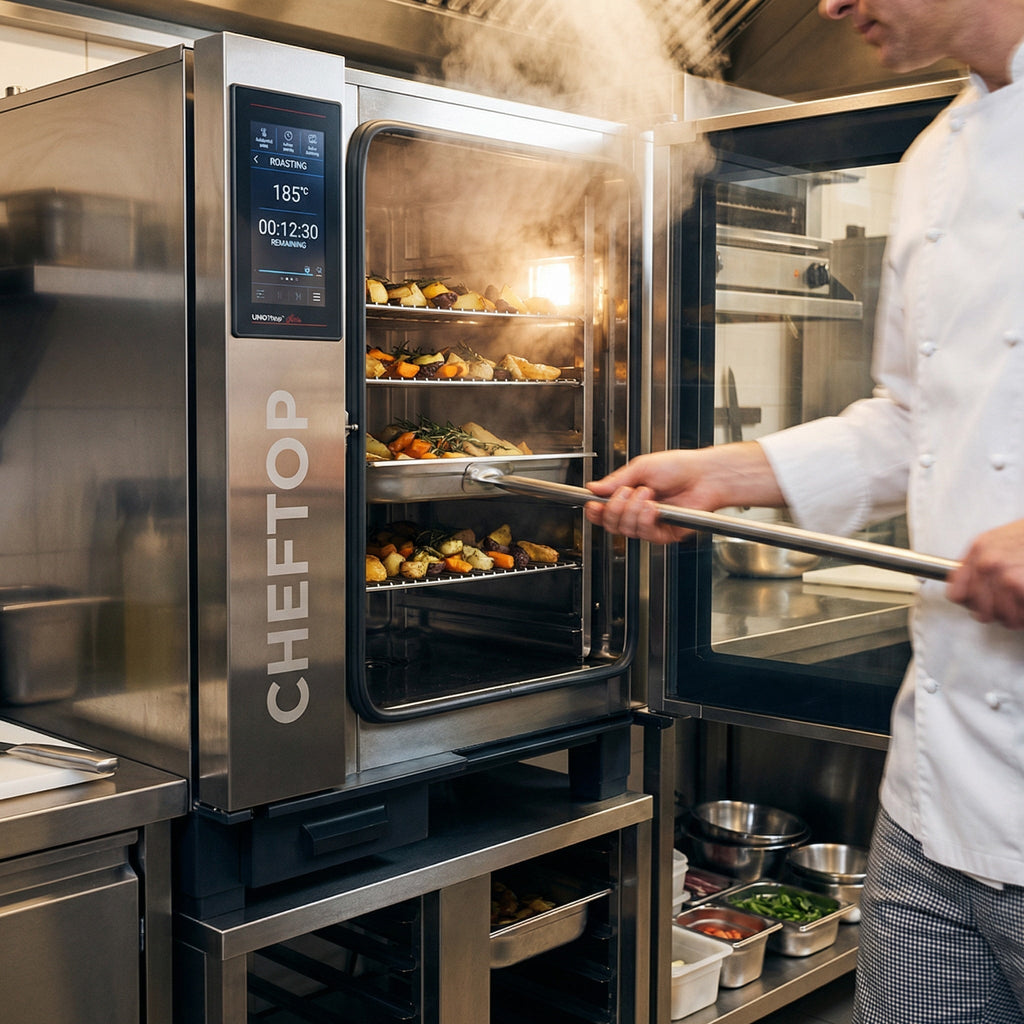
A combi steam oven is worth the bench space here: the added humidity keeps the scrolls soft in the centre while still colouring the top, and it lets you batch-bake through service without drying out the later trays the way a standard convection oven can. If you're weighing up units, the Rational iCombi Classic is a solid, program-once-and-repeat option for a café that also wants to run bread, roasting and reheating off the same unit.
Pairing It
Wine
A cool-climate Australian Shiraz — Yarra Valley or Adelaide Hills styles work well — has enough peppery spice to sit alongside the wattleseed crust without fighting the citrus lift from the finger lime. If you're building a by-the-glass pairing, keep the pour small (90ml) and lead with a one-line story on the wine list about the region, mirroring the provenance story on the plate.
Non-alcoholic
A native botanical soda — lemon myrtle and finger lime work particularly well together — gives you a pairing option that doesn't feel like an afterthought, which matters given how many guests are now actively choosing to drink less.
Sourcing Notes
Ground wattleseed and jarred or frozen finger lime pearls are both available through Australian native food wholesalers and are increasingly stocked by general foodservice suppliers, which means you don't need a specialty account to get started. Fresh finger limes are seasonal (roughly March to May), so plan a seasonal menu insert around that window if you want the fruit at its best, and rely on frozen pearls the rest of the year without losing the flavour story.
Kitchen Kit for This Dish
If you're setting up a section to run this dish (or the café version) at volume, the core equipment list is short:
- Gas cooktops or induction cooktops for the sear and the jus reduction
- Combi steam ovens for finishing the lamb to temperature without drying it out, or batch-baking the café scrolls
- Commercial ovens as a standard convection option if a combi isn't in the budget yet
The Takeaway
You don't need a foraging program or a six-course tasting menu to use native ingredients credibly. One well-executed dish, told with a short, honest sourcing story, is enough to signal to guests that your kitchen is paying attention — and it's a story your competitors serving imported, generic menus simply can't tell.

Recent Posts
-
-
-
Native by Nature: Bringing Wattleseed and Finger Lime Onto Your Menu
September 09, 2026
-