Commercial Combi Oven Buying Guide Australia 2026: Sizes, Power & Installation
- Mar 29, 2026
- 0 Comments
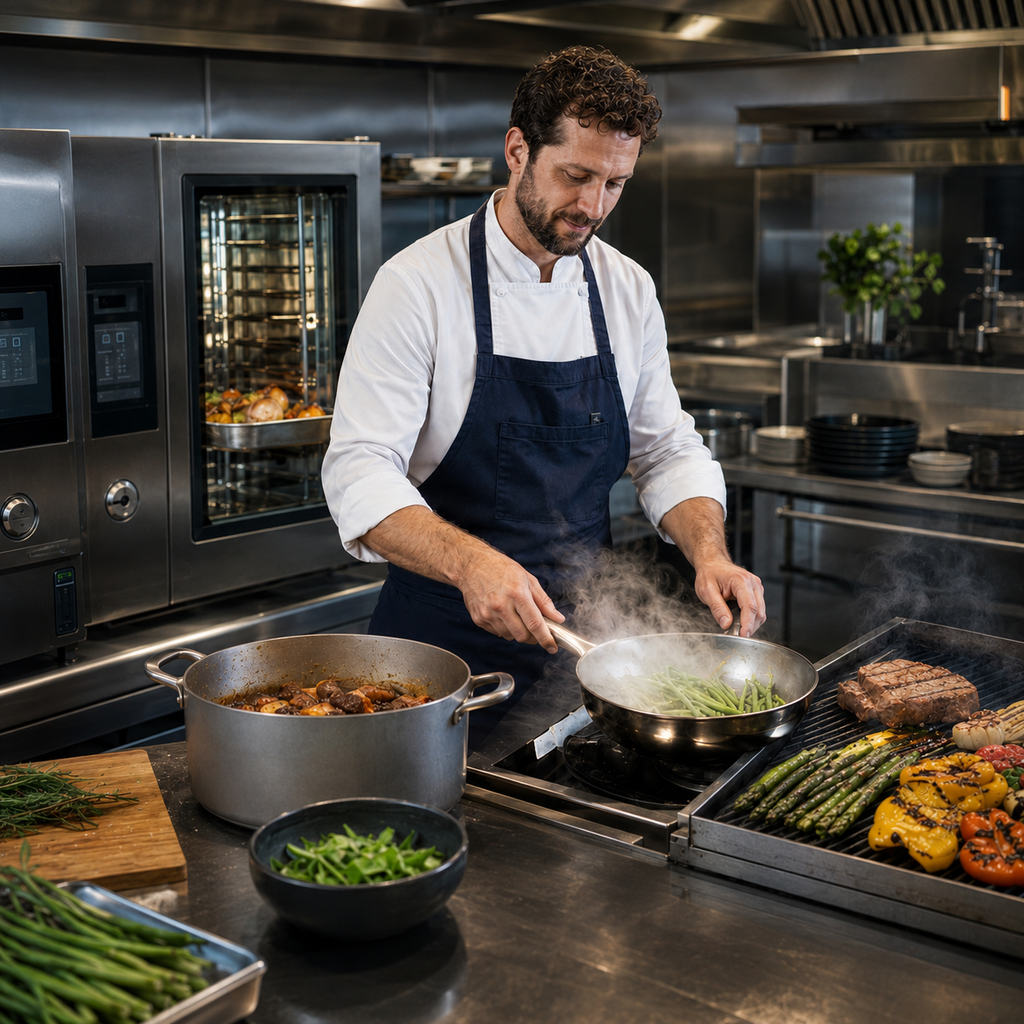
A commercial combi oven combines convection heat and steam in one appliance, giving cafés, restaurants, hotels, caterers, schools and healthcare kitchens a flexible way to roast, bake, steam, regenerate and finish food. The best model is not simply the largest one you can fit: it must match tray format, peak production, menu, power or gas supply, water quality, drainage, ventilation and the team’s ability to operate and clean it.
This 2026 Australian combi oven buying guide explains the decisions to make before comparing Rational, UNOX, Zanussi and other commercial models available through ICE Group.
A combi oven can improve flexibility, but it still needs to fit the wider kitchen. Our guide to building a more efficient commercial kitchen explains how cooking equipment, workflow, refrigeration, warewashing and service access should work together.
What is a commercial combi oven?
A combi oven typically works in three broad modes:
- Convection: circulated dry heat for baking, roasting, browning and crisping.
- Steam: controlled moisture for vegetables, seafood, dumplings and other products where moisture retention matters.
- Combination: heat and humidity used together to manage browning, yield and texture.
Depending on the model, operators may also use programmed cooking, multi-stage recipes, low-temperature cooking, overnight production, regeneration and automated cleaning. These functions can reduce the need for several single-purpose appliances, but only when the menu and workflow are suited to them.

Combi oven vs convection oven vs commercial steamer
| Equipment | Best suited to | Main strength | Important limitation |
|---|---|---|---|
| Combi oven | Mixed menus, batch production, roasting, steaming and regeneration | Multiple cooking methods in one footprint | Requires correct setup, water management, training and cleaning |
| Convection oven | Baking, roasting and dry-heat production | Straightforward operation and focused dry-heat performance | Does not provide the same humidity control as a combi oven |
| Commercial steamer | High-volume steaming of vegetables, seafood, dumplings and similar products | Dedicated steam production | Less versatile for browning, baking and roasting |
A busy restaurant may still use a combi oven alongside a chargrill, fryer or range because those appliances serve different production needs. The objective is not to replace every cooking appliance; it is to reduce bottlenecks and use each square metre of kitchen space productively.
How to choose tray size and capacity
Start with the trays, pans and products the kitchen already uses—or plans to use. Common commercial formats include compact 2/3 GN units, 1/1 GN models, larger 2/1 GN equipment and bakery models designed around 600 x 400 mm trays. A mismatch can create unnecessary expenditure on new trays and awkward transfers between preparation, cooking and holding.
Capacity should be based on peak production, not just the number of seats. Record:
- How many portions are produced in the busiest period
- The number of trays required for each batch
- Cooking time and recovery between loads
- Whether different foods can be produced together
- How much preparation can occur before service
- Whether the oven will also handle regeneration or overnight cooking
| Venue profile | What to prioritise |
|---|---|
| Compact café | Small footprint, practical tray format, simple controls and flexibility across breakfast, baking and light lunch production |
| Restaurant or pub | Fast recovery, programmable cooking, tray capacity and the ability to manage several menu components consistently |
| Hotel or caterer | Batch cooking, regeneration, multi-stage programs and capacity across functions and changing service periods |
| School, healthcare or aged care | Repeatable programs, easy cleaning, controlled production and compatibility with scheduled meal service |
| Bakery or food production | Correct tray format, humidity control, production consistency and loading capacity |
Gas vs electric commercial combi ovens
Both gas and electric combi ovens can deliver professional results. The better choice depends on the building services, model, operating pattern and installation cost.
Electric combi ovens
Electric models are widely available across compact and full-size formats. Confirm voltage, amperage and phase before ordering. Larger units commonly require substantial electrical capacity, and the cost of upgrading a switchboard or running a new circuit must be considered as part of the project.
Gas combi ovens
Gas models may suit venues with an appropriate existing supply or a design preference for gas-fired equipment. Confirm whether the model is configured for natural gas or LPG, along with connection, flue, ventilation and commissioning requirements.
Never select the energy source on purchase price alone. Ask a qualified professional to compare the complete installation and operating implications for the site.
Commercial combi oven installation requirements
A combi oven is usually part of a system that includes power or gas, water, drainage, ventilation, a stand or stacking kit, cleaning chemicals and safe access for loading. Before placing an order, verify the manufacturer’s current installation instructions for the exact model.
Power or gas
Record the required voltage, phase, amperage, plug or hardwiring arrangement, or gas type and connection. Do not rely on another model in the same range having identical requirements.
Water quality and filtration
Steam generation and automated cleaning make water quality important. The appropriate filtration or treatment solution depends on local water conditions and manufacturer requirements. Poor water management can contribute to scale, cleaning problems and avoidable downtime.
Drainage
Confirm drain position, temperature tolerance, fall and any local plumbing requirements. Allow clear access for inspection and maintenance rather than concealing the connection permanently behind fixed joinery.
Ventilation and heat management
Review steam, heat and exhaust requirements with the kitchen designer and relevant trades. A condensation hood may be available for selected electric models, but it should not be assumed to replace every ventilation requirement.
Clearances, access and supporting equipment
Check door swing, loading height, side and rear clearances, service-panel access and the route from the delivery vehicle to the final position. Include the correct stand, tray storage, water treatment, cleaning system and any stacking components in the quote.

Which commercial combi oven brand should you choose?
Brand selection should follow the operational brief. Compare the exact model, local support and complete specification rather than assuming one brand is universally best.
Rational combi ovens
ICE Group’s current range includes Rational iCombi Pro and iCombi Classic models across compact, 1/1 GN and larger formats, with electric and selected gas configurations. Rational may suit operators comparing intelligent cooking support, programmable workflows and a broad model family.
UNOX combi ovens
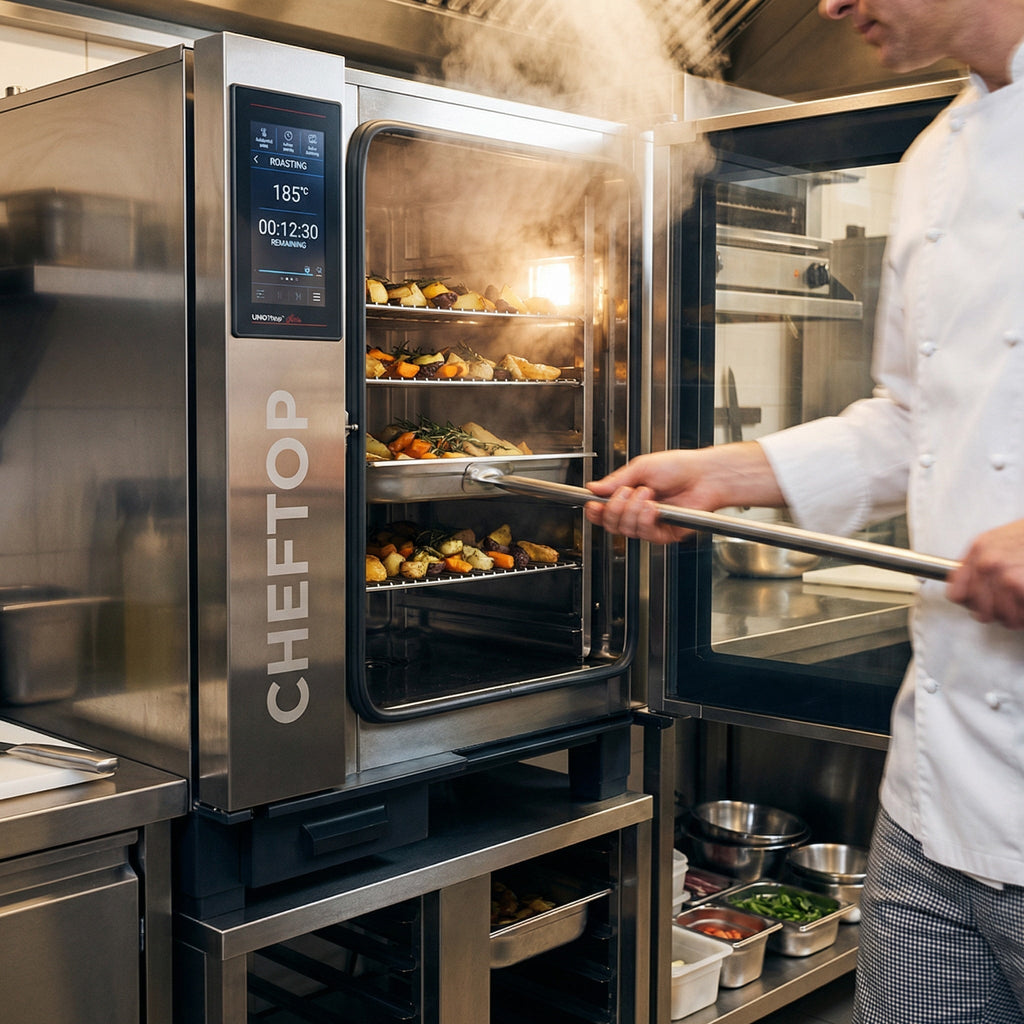
UNOX CHEFTOP and BAKERTOP models cover gastronomy and bakery applications, including compact equipment and larger tray capacities. When comparing UNOX models, check whether the tray format, control package, gas or electric configuration and available hood or accessory system suit the venue.
Zanussi combi ovens
Zanussi commercial combi ovens provide another option for operators comparing 1/1 GN electric capacity and straightforward professional cooking requirements.
Browse the current commercial combi steam oven range to compare live models and specifications. Product availability and technical requirements can change, so confirm the final data sheet before ordering.
Cleaning, training and total cost of ownership
Automated washing can simplify the process, but it does not remove the need for disciplined daily care. Staff should understand:
- Which cleaning cycle to run and when
- Which approved chemicals or cartridges the model requires
- How to inspect door seals, drains and the cooking cabinet
- How to respond to cleaning or water-system alerts
- Which tasks belong in a preventive maintenance schedule
When comparing commercial combi oven prices in Australia, include installation, stands, filtration, accessories, trays, cleaning consumables, staff training and ongoing service. The oven with the lowest advertised price may not be the lowest-cost option once the complete system is considered.
ICE Group provides commercial equipment servicing and repairs to support equipment after installation.
Common combi oven buying mistakes
- Choosing by tray count without calculating actual batch production
- Ordering before electrical, gas, water and drainage requirements are confirmed
- Forgetting the cost and space required for a stand, hood, filtration or cleaning system
- Assuming all GN or bakery trays are interchangeable
- Ignoring loading height and staff ergonomics
- Buying advanced functions without planning staff training
- Failing to budget for approved cleaning consumables and preventive servicing
- Positioning the oven where technicians cannot access service panels
Commercial combi oven buying checklist
- Menu and peak production are documented.
- Tray format and required capacity are confirmed.
- Electric or gas services have been checked for the exact model.
- Water treatment and drainage have been specified.
- Ventilation and steam management have been reviewed.
- Delivery access, door swing and loading height are suitable.
- Stand, trays, hood, stacking kit and accessories are included where required.
- Cleaning chemicals, cycles and staff responsibilities are understood.
- Warranty, service access and parts support have been considered.
- The model has been assessed against the kitchen’s full workflow.
Get help choosing and installing a commercial combi oven
ICE Group supplies commercial combi ovens and complete kitchen solutions for cafés, restaurants, hotels, schools, healthcare facilities and caterers across Wollongong, the Illawarra, Sydney and wider NSW. The team can help coordinate equipment selection with the surrounding kitchen layout, services, installation requirements and ongoing maintenance.
Ready to compare models? Explore commercial combi ovens, view ICE Group projects or request practical advice and a tailored quote.