Every successful commercial kitchen depends on more than good ingredients and skilled staff. The cooking method chosen for each dish influences flavour, texture, nutritional quality, production time and consistency. It also determines which equipment will earn its place on the kitchen floor.
For cafés, restaurants, pubs, clubs, hotels, schools and healthcare kitchens, understanding the main categories of cooking helps operators design a smarter workflow. Most techniques fall into three practical groups: dry-heat cooking, moist-heat cooking and combination cooking. Each transfers heat differently and produces a distinct result.

Dry-heat cooking: colour, caramelisation and crisp texture
Dry-heat methods cook food without relying on water, stock or steam as the main heat-transfer medium. Instead, heat reaches the food through hot air, a heated metal surface, radiant energy or cooking oil. These methods are ideal when browning, a crisp exterior or concentrated flavour is the goal.
Grilling and chargrilling
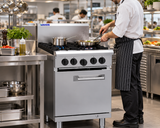
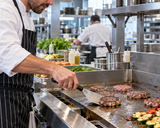
A commercial grill applies strong radiant and conductive heat, creating grill marks and a savoury char. It suits steaks, burgers, chicken, seafood and vegetables, particularly during fast service. Consistent plate or grate temperature is important: a grill that loses heat under load can slow ticket times and produce pale, uneven results.
Roasting and baking
Ovens circulate or radiate heat around food. Roasting is commonly associated with meats and vegetables, while baking is used for bread, pastries, cakes and prepared dishes. A quality commercial oven should recover temperature quickly, distribute heat evenly and provide enough tray capacity for peak production.
Sautéing, griddling and frying
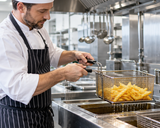
Sautéing uses a hot pan and a relatively small amount of fat for quick cooking. Griddles offer a broad, flat surface for breakfast items, burgers, seafood and vegetables. Frying transfers heat through hot oil to form a crisp exterior while retaining moisture. For reliable results, kitchens need accurate temperature control and should avoid overloading the cooking surface or fryer basket.

Moist-heat cooking: tenderness, moisture and control
Moist-heat techniques use water, stock, sauce or steam to transfer heat. They are valuable when a kitchen needs gentle cooking, moisture retention or efficient softening of dense ingredients. Because these methods do not naturally create a browned crust, chefs often pair them with a quick sear or finishing stage.
Steaming
Steam surrounds food with moist heat, helping vegetables retain colour and fish, dumplings and proteins stay succulent. In high-volume kitchens, commercial steamers and combi steam ovens can process multiple trays with repeatable programs. This is especially useful in healthcare, education and banquet catering, where consistent batches and controlled production matter.
Poaching, simmering and boiling
Poaching uses gentle heat for delicate foods such as eggs, fish and fruit. Simmering runs hotter and is suited to stocks, soups, grains, legumes and sauces. Boiling provides vigorous heat for pasta, potatoes and blanching. Matching the intensity to the ingredient is essential: delicate food can break apart at a rolling boil, while tougher ingredients may require a longer, steadier simmer.
Sous vide
Sous vide cooks sealed portions in a precisely controlled water bath. It can improve portion consistency, reduce moisture loss and support advance preparation. However, success depends on disciplined time and temperature control, suitable vacuum-packing equipment, safe chilling procedures and correct storage.
Combination cooking: building flavour and tenderness
Combination methods use dry and moist heat in sequence. Braising typically begins by searing meat or vegetables to develop colour, followed by slow cooking with a measured amount of liquid. Stewing uses smaller pieces that are usually more fully submerged. Both methods are effective for transforming economical, collagen-rich cuts into tender dishes with deep flavour.
These techniques suit production kitchens because batches can often be prepared ahead, portioned accurately and reheated with minimal loss of quality. Bratt pans, tilting kettles, heavy-duty ranges and combi ovens can all support combination cooking, depending on menu volume and available space.
How to match cooking equipment to your menu
Start with the dishes you need to produce, the number of covers and the busiest service window. A small café may gain more from a compact convection oven and griddle than a large specialist appliance. A hotel or institutional kitchen may benefit from programmable combi technology that can steam, roast, bake and regenerate food in one footprint.
Consider the following before purchasing:
- Production volume: Calculate realistic peak demand, not only average daily output.
- Menu overlap: Look for equipment that can handle several profitable menu items without creating bottlenecks.
- Utilities: Confirm electrical load, gas supply, water, drainage and ventilation requirements.
- Workflow: Position cooking equipment close to preparation, refrigeration, plating and wash-up zones.
- Cleaning: Prioritise accessible surfaces, removable components and automated cleaning where appropriate.
- Staff capability: Controls should be practical for the team members who will use the equipment every day.
Equipment selection works best when it is considered as part of the whole operation. For a broader view of workflow, refrigeration, warewashing, utilities and service access, read our guide to building a more efficient commercial kitchen.
Build a more flexible commercial kitchen
No single cooking method is best for every menu. Dry heat delivers browning and crispness, moist heat protects tenderness, and combination cooking builds complexity while making tougher ingredients more usable. The right equipment mix allows chefs to move between these methods efficiently, maintain consistency and respond to changing demand.
ICE Group Hospitality can assist with commercial cooking equipment selection, kitchen workflow, installation, servicing and complete hospitality fitout guidance. Explore the commercial cooking equipment range online or contact the ICE Group team for practical advice tailored to your venue.