A commercial coffee brewer should match the drinks you serve and the way guests order. Batch filter brewing, percolators and espresso machines solve different service problems. Start with the menu and peak demand before comparing machine size.
A hotel breakfast buffet may need several litres ready at once. An event caterer may need a portable serving station. A café taking individual flat-white orders needs espresso extraction, milk steaming and a workable barista station.
Batch brewing, percolators and espresso: what changes?
Batch filter brewers pass hot water through ground coffee into a decanter, airpot or thermal server. A percolator circulates heated water through a basket of coffee during its brew cycle. An espresso machine extracts concentrated coffee under pressure, usually for drinks made to order.
| Format | Where it can fit | What to check |
|---|---|---|
| Batch filter brewer | Breakfast, meetings and a black-coffee service with predictable peaks. | Brew volume, cycle time, minimum batch, server type and how the next batch is prepared. |
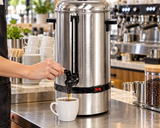
| Coffee percolator | Catering, functions and staffed or self-service stations serving brewed coffee. | Usable fill range, brew cycle, serving tap, holding controls and transport arrangements. |
| Commercial espresso machine | Cafés and venues serving espresso, flat whites, cappuccinos and other drinks to order. | Group layout, steam performance, grinder, water treatment, staff workflow and site services. |
Filter coffee and percolated coffee are different brewing processes. Neither is a direct substitute for an espresso machine when the menu depends on espresso shots and steamed milk. Some venues use a batch service alongside espresso to handle different orders.
Size the brewer around the busiest serving window
Write down the number of drinks needed during the busiest 15–30 minutes, then separate black coffee from milk-based orders. For a brewer that makes coffee in batches, include time to brew, serve and prepare the next batch. A large tank alone does not establish continuous output.
Compare litres using your actual cup fill. A manufacturer’s “100 cups” may use a smaller cup than your takeaway size. For espresso, assess the mix of drinks, simultaneous milk steaming and staff capacity rather than converting boiler litres into a cups-per-hour promise.
Holding also matters. Ask how the selected system keeps coffee ready to serve and how the venue will manage freshness. Smaller, well-timed batches can suit uneven demand better than preparing a full vessel that sits through a quiet period.
Plan the whole coffee station
- Water and power: confirm whether the model is manually filled or plumbed, its electrical requirements and the water-treatment recommendation. Check these before planning cabinetry or booking installation.
- Grinding: match the grinder and grind setting to the brewing method. Read our commercial coffee grinder guide when comparing espresso-station requirements.
- Serving: leave space for cups, lids, milk service, waste and refilling. A self-service tap needs a stable position, drip management and a layout that keeps guests clear of hot surfaces.
- Cleaning: include the brew basket, server, tap or espresso group cleaning in the shift routine. Follow the selected machine’s instructions for cleaning and descaling.
For a plumbed café setup, use our coffee-machine installation, filtration and maintenance guide before selecting the final machine. Confirm who supplies the water connection, drainage where required and commissioning.
Current equipment examples at ICE Group

Birko 1060084 20L percolator
A brewed-coffee option to assess for catering and function service. Confirm its fill range and brew cycle against your guest numbers.

Wega Polaris EVD 2-group espresso machine
An espresso format for drinks made to order. Plan the grinder, milk workflow and installation requirements with the machine.
These examples show two different service formats. For a dedicated batch filter brewer, ask ICE Group to confirm a suitable current model, server configuration and supply options. Do not assume a percolator or espresso machine provides the same batch-filter workflow.
Common buying questions
Is a commercial coffee brewer the same as an espresso machine?
The term can cover several systems. A batch brewer makes a vessel of filter coffee; an espresso machine makes concentrated shots for individual drinks. Compare the brewing method before comparing capacity.
Can a percolator make café-style flat whites?
A percolator makes brewed coffee. A flat-white menu needs an appropriate espresso and milk-steaming setup, or another system specifically designed for that drink.
Should I buy the largest percolator available?
Choose around the usable batch sizes and demand pattern. Check the minimum fill and cycle time; a larger vessel may not suit a small or irregular service.
Do commercial coffee machines need plumbing?
It depends on the model. Confirm water supply, drainage, electrical connection and water treatment from the selected equipment’s installation documents.
Is batch coffee useful alongside espresso?
It can suit a separate black-coffee offer or a predictable rush. Plan the menu, staff responsibilities and holding routine so both services are easy to run.
Choose around your busiest service
Talk to ICE Group about your venue, available space and service requirements. Browse commercial coffee machines gives you the current range; our team can help check the configuration before you order.
Related reading: 2-group vs 3-group espresso machines · Installation and water filtration