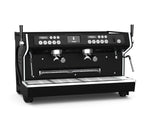
A café can have plenty of espresso-machine capacity and still build a queue at the grinder. Repeated adjustments, slow handovers and an awkward bench layout all become noticeable when several milk coffees land together.
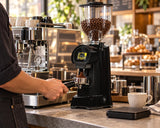
This guide focuses on espresso service in Australian cafés and hospitality venues. Start with the commercial coffee grinder range and use the decisions below to make a practical shortlist. Filter, retail-bag and espresso grinding can require different equipment; confirm the intended use of each model.
How much grinding does your busiest service require?
Record the busiest fifteen or thirty minutes, including takeaway orders, dine-in coffees, extra shots and the split between your main blend and decaf. Cup counts alone can hide the difference between single and double shots or several recipes.
As a planning illustration, forty drinks using one 20 g dose each require 800 g of ground coffee. If those drinks arrive over fifteen minutes, that demand is concentrated into the rush. Add any extra doses and separate decaf demand using your actual recipe. This is a workload example, not a recommended recipe or a grinder capacity rating.
Use that workload when discussing the grinder's intended duty, repeated dispensing and recovery with the supplier. A brief test should reflect consecutive doses and the way your baristas work, rather than one isolated grind. Avoid turning an advertised grams-per-second figure into a guaranteed cups-per-hour claim.
Does a larger burr diameter automatically mean a better grinder?
Burr diameter is one useful specification, alongside burr design, motor, adjustment, dosing system and the intended application. A larger number by itself does not establish better coffee or suitability for every café.
Compare models using the same coffee and espresso recipe where practical. Ask how the grinder behaves through repeated doses, how fine adjustments are made and how the burrs are accessed for maintenance. Assess the full model rather than applying a performance claim from one burr size to every grinder with that diameter.

Which dosing and adjustment features matter during service?
| Check | What to assess | Why it matters |
|---|---|---|
| Dose control | How doses are programmed, dispensed and checked with scales. | A timed setting should be verified by mass with the coffee being used. |
| Adjustment | How easily the team makes controlled grind changes. | The setting needs to support the espresso recipe through normal service adjustments. |
| Portafilter support | Fork adjustment, clearance and stable handling. | Confirm the actual portafilter sits securely and the workflow is comfortable. |
| Cleaning and maintenance | Access, instructions, burr replacement and local support. | Include ongoing care and downtime in the buying decision. |
| Bench fit | Full height, hopper access, nearby equipment and cable route. | A grinder must be practical to fill, operate and clean in its installed position. |
Timed dosing and grind-by-weight are different approaches. A time-based dose dispenses for a set duration; a weight-based system measures dose mass as part of its operation. Confirm which system the exact model supplies. Continue routine checks appropriate to the machine and your coffee process.
Set a simple dial-in routine: check the dose, extraction and taste against your recipe, then make controlled adjustments. Equipment can support repeatability, but staff training and consistent handling remain part of the result.
How do the Eureka Helios 65 and Helios 75 compare?
Eureka's manufacturer information identifies flat hardened-steel burrs of 65 mm for the Helios 65 and 75 mm for the Helios 75. Both product pages describe electronic touch controls, three dose settings plus continuous operation, stepless adjustment and an adjustable hands-free fork.
Compare the Helios 65 in black and Helios 75 in silver as two current ICE Group examples. Ask for a recommendation against your peak dose demand and confirm the Australian supplied specification. The larger burr format is a reason to investigate capacity, not a promise that it will improve every venue's service.

How should the grinder fit the rest of the coffee station?
Map the sequence from grinding to tamping, extraction, milk preparation and hand-off. Keep scales, knock box and cleaning tools within a sensible working area. Check clearance for filling the hopper and follow the electrical and cleaning instructions for the exact grinder.
Plan a separate decaf or second-bean workflow if it is part of the menu. Changing beans repeatedly can interrupt service, so discuss the setup and handling requirements before assuming one grinder will cover every coffee offer.
Match the station to the espresso machine as well. Our 2-group versus 3-group machine guide explains the wider service decision, while the coffee-machine installation guide covers site planning. A balanced station gives the grinder, machine and baristas room to work together.
Before ordering, send the team your espresso dose, busiest order window, coffees offered, current machine and available bench dimensions. Request warranty and service details for the quoted model, including routine cleaning and the route for replacement burrs.
Common buying questions
Can a small café use a commercial grinder?
Yes, where the model suits the coffee, intended workload and available space. Choose around the actual process and support needs rather than venue size alone.
Does a timed grinder dispense the same weight every time?
A timed setting controls duration. Check dose mass using scales and review the setting when the coffee or grind setting changes.
Is an espresso grinder suitable for retail bags or filter coffee?
Not automatically. Confirm the manufacturer’s intended applications, adjustment range, dispensing arrangement and duty before planning a different use.
Should I buy the grinder and espresso machine together?
It is useful to assess them as one station. Existing equipment can be retained where it meets the service brief, but each stage needs enough practical capacity.
Build a coffee station around your rush
Tell ICE Group your coffee recipe, peak order pattern and current equipment. Call 02 4228 0100 for help with the shortlist.
Compare coffee grindersExplore coffee machinesDiscuss your coffee stationModel references: Eureka Helios 65 · Eureka Helios 75.
Prepared 17 October 2026. Confirm the specification, supplied configuration and installation requirements for the exact model being quoted.