Commercial Espresso Machine Features That Actually Matter in a Busy Café
- Oct 05, 2026
- 0 Comments
Feature lists can make commercial coffee machines look more complicated than they are. The better way to assess a machine is to ask what happens during the busiest 30 minutes: how many baristas are working, how many milk drinks are ordered, how quickly grinders keep up and whether staff can move around the machine without getting in each other’s way.
This guide separates the features that materially affect café service from the features that are useful only in certain venues.

How much does group count really matter?
Group count affects simultaneous extraction capacity, but it is not a complete measure of café output. A well-planned 2-group machine can outperform a poorly planned 3-group station if grinders, milk handling or staff movement are the real bottlenecks.
For a deeper comparison, see our 2 Group vs 3 Group Commercial Coffee Machines guide.
Temperature stability and boiler recovery
Consistency under sustained demand matters more than impressive controls on an idle machine. Compare the machine’s intended commercial duty, boiler configuration, recovery behaviour and temperature-management features against the actual service pattern.
Venues should also consider how often multiple groups and steam wands are used together. A machine that feels capable during a quiet demo can behave differently when espresso and milk production are continuous.
Steam performance matters in milk-heavy cafés
Australian cafés often place heavy demand on the steam system. Flat whites, cappuccinos and lattes can make steam recovery as important as espresso-group capacity.
Useful questions include:
- Can the steam system support the venue’s peak milk-drink mix?
- Can two baristas texture milk without fighting for space?
- Are the steam wands comfortable and practical to clean?
- Is there enough jug space beside the machine?

Volumetric dosing, shot timers and feedback
Automation is valuable when it removes a repetitive step without hiding poor technique. Volumetric dosing can help baristas repeat established recipes, while shot timers provide a visible cue when extraction behaviour changes.
These tools do not replace grinder adjustment, dose control, distribution, tamping or tasting. They are operational aids, not substitutes for a calibrated coffee program.
Ergonomics and barista workflow
Look beyond the specification sheet and map:
- grinder position and dosing path;
- tamping and knock-box location;
- milk refrigeration and jug access;
- cup storage and takeaway packaging;
- steam-wand clearance;
- finished-drink hand-off;
- cleaning and service access.
A wider machine may improve simultaneous working space, but only if the bench and surrounding station can support it.
The grinder is part of machine performance
A commercial espresso machine can only work as fast and consistently as the grinder feeding it. Grinder burr size, motor duty, dosing workflow and recovery between doses should be considered alongside espresso-machine capacity.
ICE Group now separates this decision into a dedicated Commercial Coffee Grinders collection so operators can pair grinders and espresso machines deliberately rather than treating the grinder as an accessory afterthought.

Must-have vs nice-to-have features
| Feature | Why it matters | Priority |
|---|---|---|
| Suitable group count | Matches simultaneous extraction to peak workflow | Core |
| Commercial steam capacity | Supports milk-heavy menus during peak service | Core |
| Repeatable dosing controls | Supports consistent operation across staff | High |
| Shot timers / feedback | Helps staff identify changes in extraction behaviour | High |
| Good ergonomics | Reduces awkward movement and station congestion | Core |
| Advanced displays / software | Can improve control, monitoring or training in the right venue | Depends on operation |
| Decorative options | May support front-of-house design | Secondary to workflow |
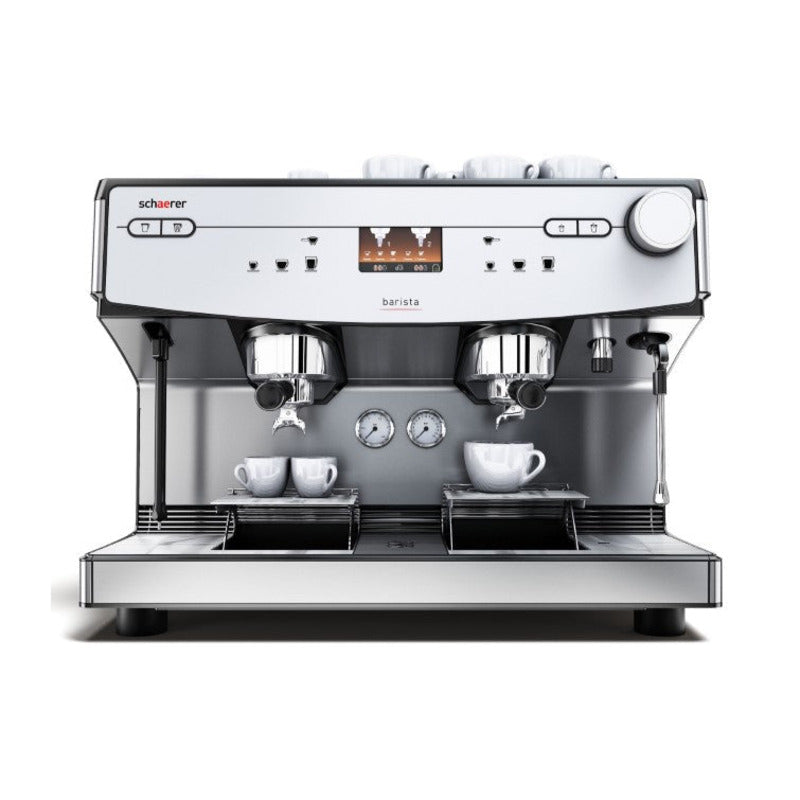
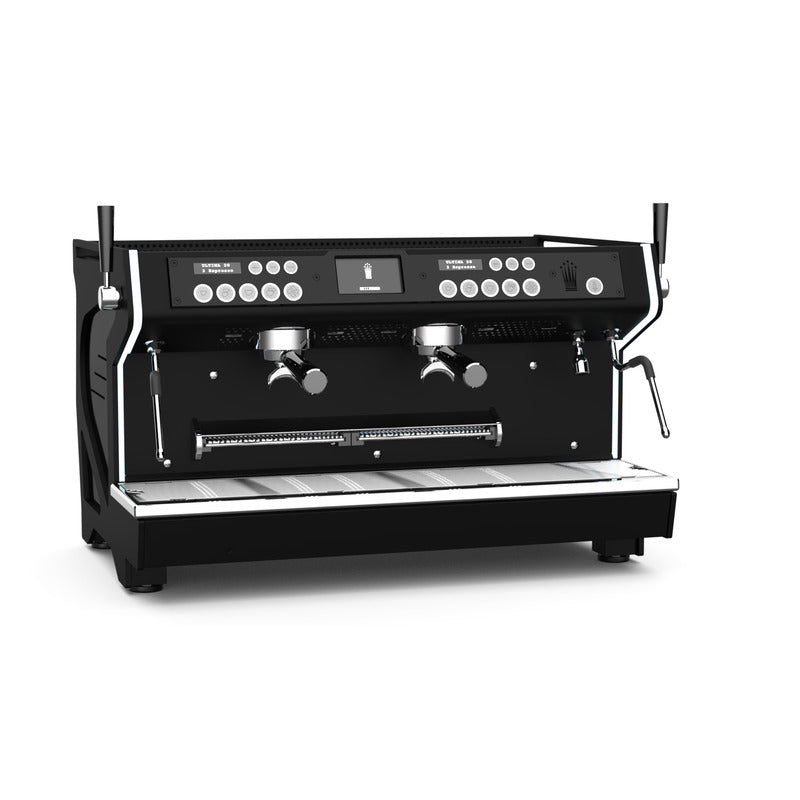
Current ICE Group machines illustrate different approaches. The Conti MC Ultima 2 Group is positioned around refined ergonomics and control, while the Schaerer Barista 2 Group combines professional portafilter preparation with additional workflow support. Compare the model to the job rather than choosing from a feature checklist alone.
Build the coffee station around peak service
Compare commercial espresso machines, pair the right grinder, or use the Café equipment pathway to plan the surrounding station.
Browse coffee machines → Compare grinders → Plan the café station →Explore the Commercial Coffee Machine Guides
- 2 Group vs 3 Group Commercial Coffee Machines
- Commercial Espresso Machine Features That Actually Matter
- Installation, Water Filtration, Power & Maintenance
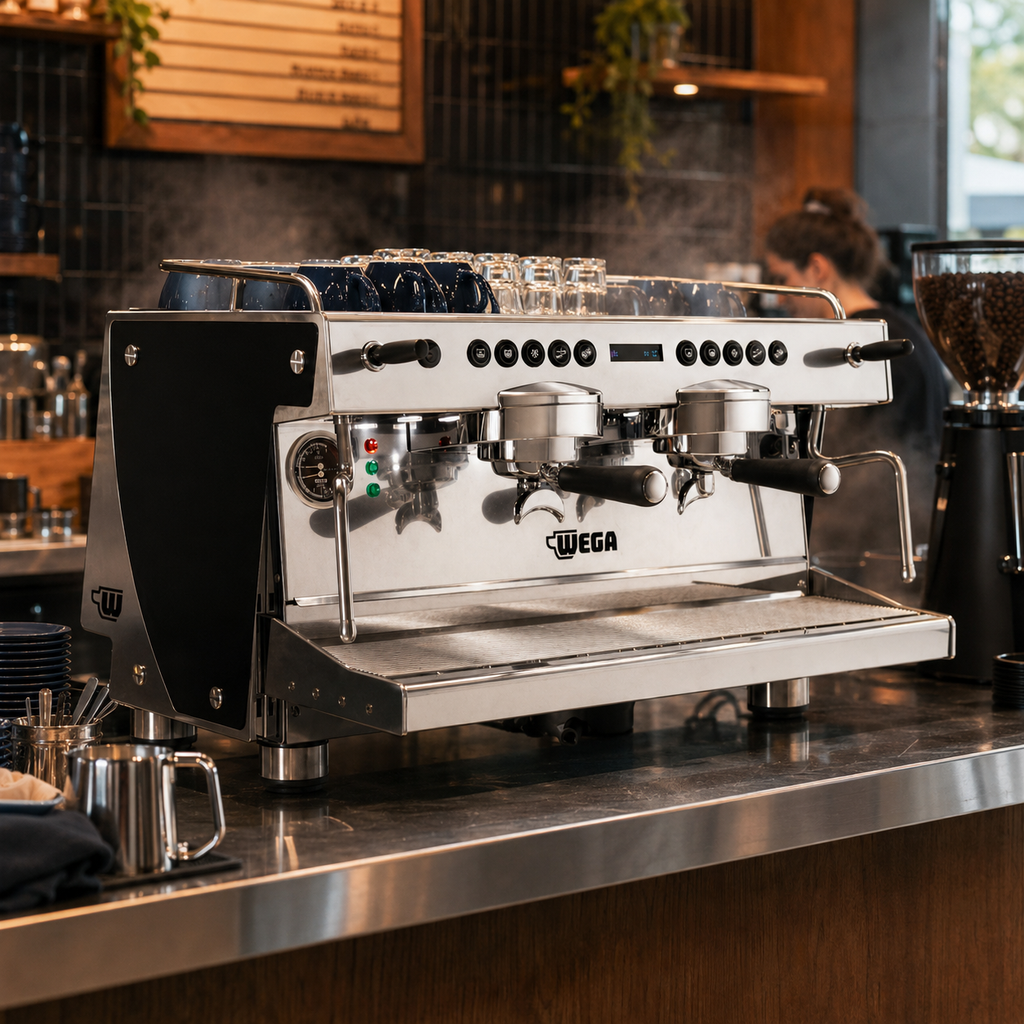
- Wega Rover 2 Group Buyer’s Guide
Frequently asked questions
What features matter most in a commercial coffee machine?
Start with group count, temperature and recovery, steam performance, repeatable dosing, ergonomics, service access and compatibility with the grinder and site services.
Are shot timers essential?
They are useful operational feedback, especially in busy cafés, but they do not replace proper grinder adjustment or coffee-quality checks.
Is more automation always better?
No. Automation is useful when it reduces repetitive work or improves repeatability without creating unnecessary complexity for the venue.
Should the grinder be chosen after the espresso machine?
They should be specified together. Grinder capacity and workflow can become the limiting factor even when the espresso machine itself has enough group capacity.
Reviewed 5 October 2026 · Martin Costanzo · ICE Group Hospitality

Recent Posts
-
-
-
Hoshizaki vs Bromic vs Brema: Comparing Commercial Ice Machines
October 05, 2026
-
-
-
-
Undercounter vs Modular Ice Machines: Which Setup Fits Your Venue?
October 05, 2026
-