Commercial Ice Machine Installation: Drainage, Filtration, Ventilation & Maintenance
- Oct 05, 2026
- 0 Comments
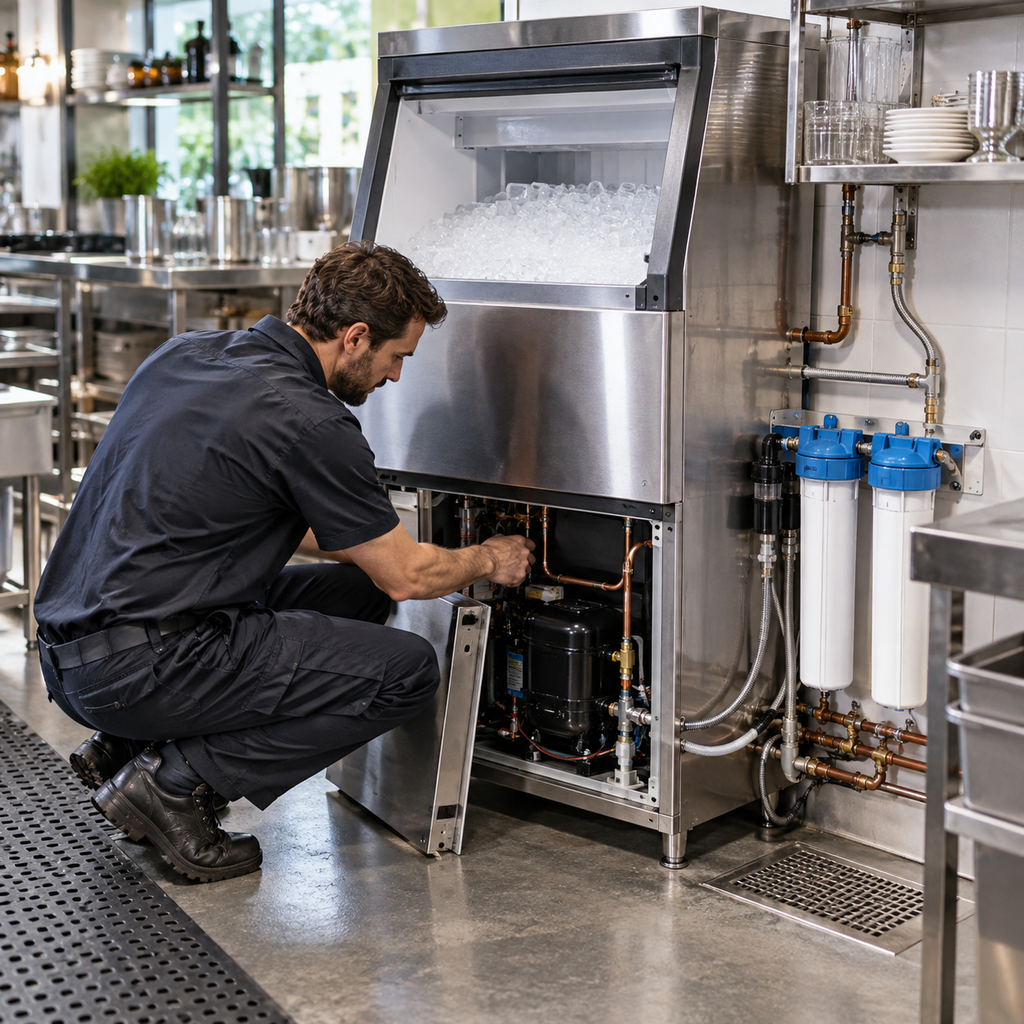
Ice machines combine refrigeration, potable water and drainage in one appliance, often inside a hot, busy hospitality environment. That makes site preparation just as important as choosing the production capacity.
This guide explains the planning questions venue owners should resolve before installation and the operating habits that help keep a commercial ice machine clean and serviceable.

What should be checked before ordering an ice machine?
Confirm the site before committing to the model. Record the available width, depth and height, then add the manufacturer-required ventilation and service clearances rather than treating the cabinet dimensions as the full installation envelope.
| Site item | What to confirm |
|---|---|
| Water | Potable supply, pressure, connection size and water quality requirements. |
| Drainage | Drain position, route, fall and any model-specific pump requirements. |
| Electrical | Voltage, plug or hardwired connection and circuit requirements. |
| Ventilation | Air intake/exhaust clearances and the heat conditions around the machine. |
| Access | Cleaning, filter replacement and technical service access after surrounding benches are installed. |
Why do water quality and filtration matter?
Water quality affects the ice and the machine. Minerals and other site-water characteristics can contribute to scale, while inappropriate or neglected filtration can create its own operating problems.
Do not select a filter only because it is labelled “for ice machines”. Confirm the manufacturer's requirements, local water conditions, expected flow and replacement interval for the selected equipment. Treat filters, hoses and other water-treatment components as part of the site specification rather than recommendations inside the Ice Machine Size Finder.
What drainage does a commercial ice machine need?
The drain must suit the machine and the site. Gravity drainage needs a practical path and fall; some installations or models may use pump arrangements. The drain route should also remain accessible for cleaning and troubleshooting.
Do not assume an existing underbench drain is automatically suitable because another appliance was previously connected there. Confirm the selected model's instructions before installation.
How much ventilation and clearance does an ice machine need?
Use the manufacturer's clearance requirements, not a generic gap. Refrigeration equipment needs to reject heat. Restricted airflow or a hot enclosed space can reduce performance and make the equipment work harder.
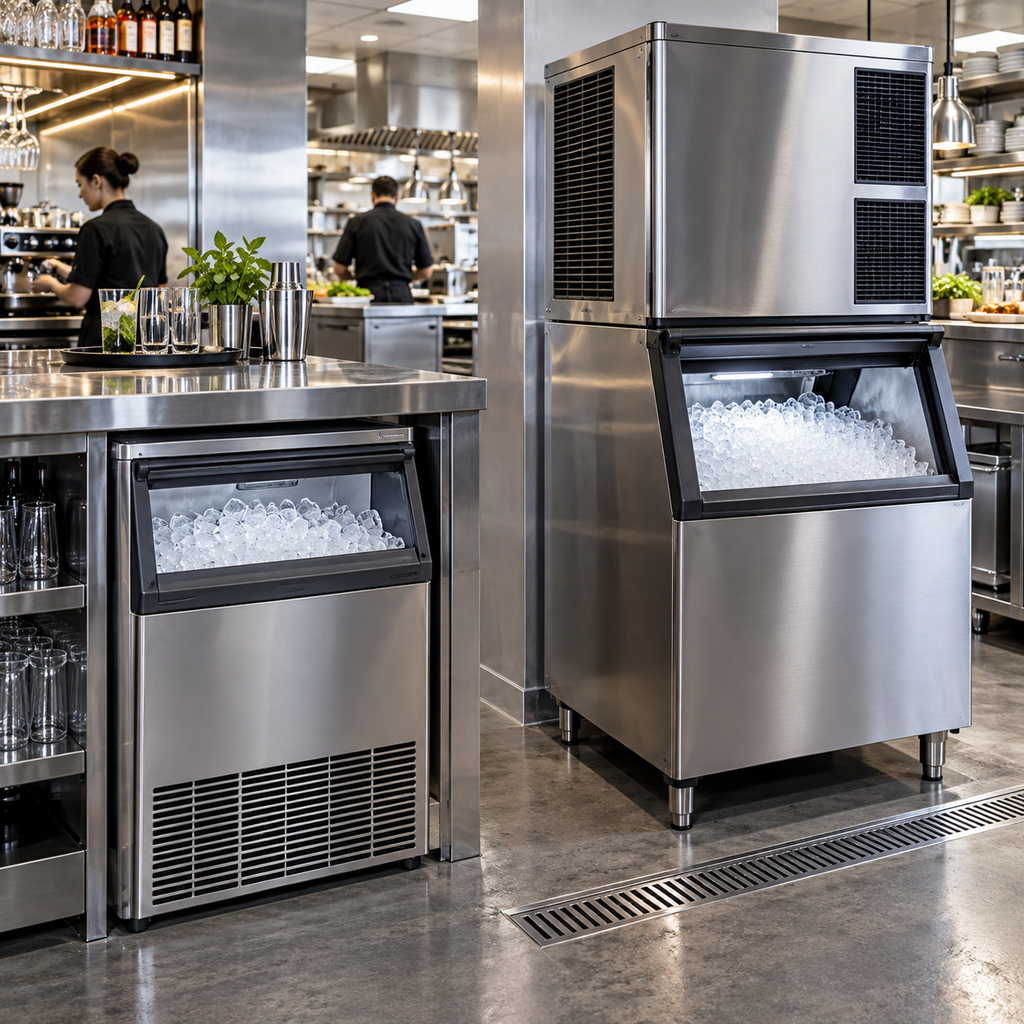
This is particularly important with undercounter equipment: a machine can fit neatly between two cabinets and still be poorly installed if the intended air path has been blocked.

What electrical details should be confirmed?
Match the machine to the available electrical supply before delivery. Confirm voltage, connection type and circuit requirements from the model documentation. Larger modular machines can have very different electrical requirements from compact self-contained units.
Any electrical or plumbing work should be carried out by appropriately qualified trades where required.
How should a commercial ice machine be maintained?
Build cleaning and inspection into the operating routine from day one. The exact procedure and frequency should follow the manufacturer's instructions and the venue's food-safety procedures.
- keep the bin and food-contact areas clean;
- inspect air intakes and condensers where applicable;
- replace water-treatment components on the specified schedule;
- watch for changes in ice quality, production or cycle behaviour;
- keep drains and surrounding areas clean and unobstructed;
- leave access for preventative and corrective service.

What should be checked at installation handover?
- Confirm the installed machine and accessories match the approved specification.
- Check the water, drain and electrical connections against the model instructions.
- Confirm airflow and service clearances remain available after surrounding work is complete.
- Record filter details and replacement schedule where applicable.
- Keep operating, cleaning and service documentation accessible to the venue team.
- Train the responsible staff member on routine cleaning and basic operating checks.
Planning a new ice-machine installation?
Choose the capacity and format first, then confirm the site and model-specific services before ordering.
Read the buying guide →Compare formats →Discuss the site with ICE Group →Frequently asked questions
Does every commercial ice machine need a water filter?
Water treatment depends on the selected model, local water conditions and manufacturer guidance. Confirm the appropriate filtration rather than assuming one universal filter suits every installation.
Can an ice machine be installed tight against a wall?
Only if the model's documented clearance and airflow requirements allow it. Always use the manufacturer's installation requirements.
Why can ice production fall in a hot venue?
Refrigeration performance can change with ambient and inlet-water conditions. This is one reason installation environment and realistic operating conditions should be considered when sizing the machine.
Who should install a commercial ice machine?
Installation should follow the manufacturer's instructions and relevant local requirements, using appropriately qualified trades for electrical, plumbing or other regulated work where required.
Reviewed 5 October 2026 · Martin Costanzo · ICE Group Hospitality

Recent Posts
-
-
-
Hoshizaki vs Bromic vs Brema: Comparing Commercial Ice Machines
October 05, 2026
-
-
-
-
Undercounter vs Modular Ice Machines: Which Setup Fits Your Venue?
October 05, 2026
-