Commercial Ice Machine Buying Guide: Size, Ice Type, Storage & Installation
- Oct 05, 2026
- 0 Comments
A commercial ice machine is easy to underestimate because one specification tends to dominate the conversation: kilograms per 24 hours. That number matters, but it is only the beginning. A café that needs ice mainly for iced drinks has a different load profile from a cocktail bar, hotel, club, restaurant, healthcare site or events venue—even when the daily total looks similar.
This guide is designed for Australian hospitality operators comparing a new machine or replacing an undersized unit. It focuses on the decisions that affect day-to-day service: capacity, storage, ice format, machine layout and installation. If you already know roughly how many drinks or serves use ice each day, the Commercial Ice Machine Size Finder gives you a quick starting capacity range before you compare equipment.

How do you size a commercial ice machine?
Start with peak daily demand, not average demand. Estimate the amount of ice actually used in drinks, food preparation, displays and other service tasks on a genuinely busy day, then allow additional capacity for warmer weather, events and growth. The aim is not to buy the biggest machine possible; it is to avoid building a system that is already at its limit when service gets difficult.
A simple beverage calculation is:
number of ice-using serves × average ice per serve = base serving ice requirement.
Then add any separate kitchen, display or function demand. For example, if 180 drinks use an average of 180 g of ice each, the drinks component alone is 32.4 kg. That is not a machine recommendation by itself: melt, non-drink use, storage drawdown and operating conditions still need to be considered.
Use the ICE Group Size Finder to run that calculation with a selectable buffer and see a practical production band.
Not sure where to start?
Estimate your venue's daily production range first, then compare machines that fit the result.
Use the Ice Machine Size Finder → Browse commercial ice machines →What is the difference between ice production and storage?
Production is how much ice the machine can make over time; storage is how much finished ice can be held ready for service. They solve different problems and should not be treated as the same number.
| Specification | What it tells you | Why it matters |
|---|---|---|
| Production capacity | The machine's rated ice output over 24 hours under stated conditions. | Determines how quickly the system can replenish what the venue consumes. |
| Storage capacity | The amount of finished ice the bin can hold. | Determines how much ice is immediately available when a rush begins. |
| Peak draw | How much ice can disappear during your busiest service block. | Shows whether the stored reserve can cope before production catches up. |
A busy bar can consume a large amount of ice in a short evening window. A machine may technically make enough ice across 24 hours but still leave the venue short at 8:00 pm if the storage reserve is too small. Conversely, an oversized bin does not make an undersized machine produce faster.
Which commercial ice type should you choose?

Choose ice by application first, then choose a machine that produces enough of that format. Ice shape affects presentation, surface area, handling and how the ice behaves in the final service.
| Ice type | Typical commercial use | Planning consideration |
|---|---|---|
| Cube / gourmet-style ice | Drinks, table service, premium beverage presentation | Check the actual cube dimensions and glassware rather than assuming every cube machine produces the same format. |
| Crescent ice | High-volume beverage service and hospitality applications | Useful where consistent beverage ice and dependable throughput matter. |
| Flake ice | Food display, seafood, preparation and product cooling | Designed for different applications from a standard beverage cube. |
| Nugget / granular ice | Dispensed beverages, healthcare and specialised service applications | Confirm dispensing, storage and cleaning requirements for the intended use. |
| Special-format ice | Premium cocktails, presentation-led venues and specialist applications | Verify the exact output shape, size and production capacity before specifying. |
ICE Group currently carries commercial machines across cube, crescent, flake, nugget, granular and dispensing formats. The Commercial Ice Machines collection is the transactional hub; this guide is here to help you narrow the specification before you enter the product grid.
Undercounter or modular ice machine?
Choose undercounter when compact installation and moderate output are the priority; choose modular when production volume and storage flexibility are more important.
| Criteria | Self-contained / undercounter | Modular head + separate bin |
|---|---|---|
| Footprint | Compact all-in-one cabinet | Larger system with separate storage |
| Storage | Built into the machine | Selected separately to suit demand |
| Production potential | Best suited to lower and medium commercial loads | Better suited to higher-volume production |
| Installation | Often simpler, but still requires correct services and ventilation | More planning around compatible bin, clearances and service access |
| Best fit | Cafés, bars, restaurants and secondary service stations | Hotels, clubs, high-volume bars, large restaurants and event operations |
The labels are useful, but installed dimensions matter more. “Undercounter” does not automatically mean a machine will fit beneath every bench once ventilation and service access are allowed for.
How should venue type affect ice-machine sizing?
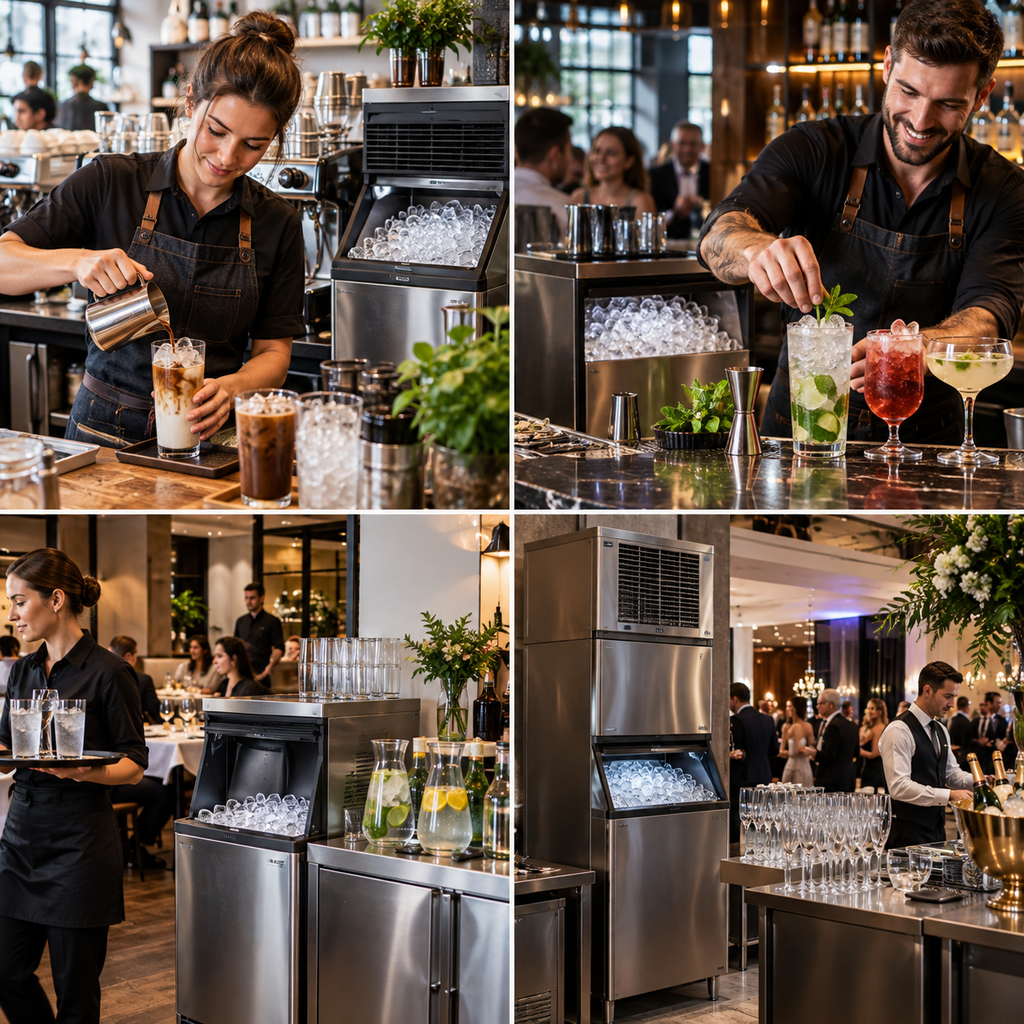
Venue type changes when ice is consumed, not just how much. A café may have a morning-to-afternoon pattern dominated by iced coffee and cold drinks. A bar can draw most of its daily ice over a concentrated evening rush. Hotels, pubs and clubs may combine bars, kitchens, functions and accommodation demand.
Measure iced-coffee and cold-drink volume separately from kitchen use. Summer menu growth can change demand quickly.
Include table water, beverages, bar use and any kitchen preparation requirement.
Map each service point and functions demand. One central machine may be supporting several outlets.
Size around the largest realistic service block and recovery period, not a quiet-day average.
If iced beverages are an important part of your summer menu, our article Iced Everything: How Cold Brew, Iced Lattes and Clear-Ice Cocktails Are Reshaping Summer Menus looks at the wider drinks-station workflow.
What services does a commercial ice machine need?

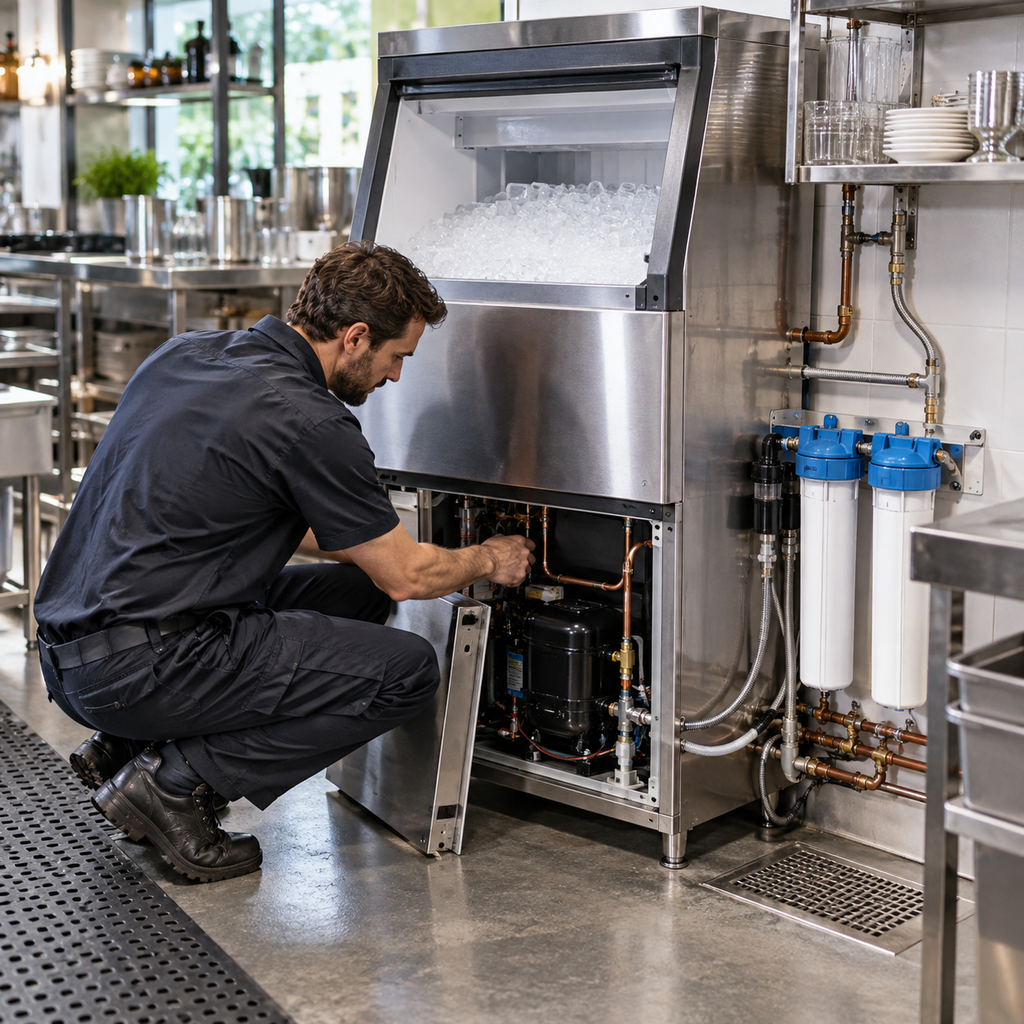
Most commercial installations require suitable potable water, drainage, electrical supply, ventilation and physical service access. These checks should happen before a model is ordered, not after it arrives.
Confirm inlet requirements, water pressure and water quality for the selected machine.
Check drain position, fall and any model-specific drainage requirements.
Allow the clearances required by the manufacturer so heat can be rejected effectively.
Confirm voltage, plug or connection requirements and circuit capacity for the model.
Water treatment may be appropriate for equipment protection and ice quality, depending on site water and manufacturer requirements.
Leave practical access for cleaning, filters, condenser maintenance and technical service.
Rated production is published under defined test conditions. Actual output can change with ambient temperature, inlet-water temperature, airflow, water quality and maintenance. That is why a specification review should consider both the headline output and the conditions in which the machine will actually work.
How should you compare Hoshizaki, Bromic, Brema and other ice-machine brands?
Compare the model that fits the duty, not the logo in isolation. Brand reputation matters, but the useful comparison is between machines that genuinely match the same output class, ice format, installation type and site constraints.
ICE Group's range includes brands such as Hoshizaki, Brema, Bromic, Polar and other commercial manufacturers. A proper comparison should line up:
- rated and realistic production capacity;
- ice type and dimensions;
- integrated or separate storage;
- physical dimensions and ventilation;
- water, drain and electrical requirements;
- warranty and local parts/service support;
- cleaning and routine maintenance access.
For a like-for-like range comparison, see Hoshizaki vs Bromic vs Brema: Comparing Commercial Ice Machines.
A practical commercial ice-machine shortlist process
Reduce the decision to a repeatable sequence: demand → ice type → format → site → models.
- Estimate peak daily ice demand. Use actual counts where possible.
- Add a realistic operating buffer. Include seasonality, events and planned growth.
- Choose the ice format. Match it to the menu or commercial application.
- Decide self-contained or modular. Balance footprint against production and storage flexibility.
- Check the site. Measure space and confirm water, drain, power, ventilation and service access.
- Shortlist comparable models. Compare products within the same job, not merely the same brand.
- Confirm installation details before ordering. Storage bins, filters, adapters and other installation components should be specified for the selected machine and site.
Turn the guide into a shortlist
Use the Size Finder for a starting capacity, browse the commercial range, or send the ICE Group team your venue details for a specification check.
Find your capacity → Compare machines → Speak to a specialist →Explore the ice-machine authority cluster
- Cube vs crescent vs flake vs nugget ice
- Undercounter vs modular ice machines
- Hoshizaki vs Bromic vs Brema
- Installation, drainage, filtration & maintenance
- Ice machines by venue
Frequently asked questions
What size commercial ice machine do I need?
Start with the amount of ice used during a busy realistic day, add separate kitchen or display demand, then apply a buffer for peak conditions and growth. Production capacity and storage should be checked separately. The ICE Group Size Finder can estimate a starting production class.
Is daily ice production the same as storage capacity?
No. Production capacity is the amount of ice a machine can make over time, while storage capacity is the amount of finished ice that can be held ready for service.
Should a café choose an undercounter ice machine?
Often, but not automatically. Undercounter units suit many cafés because they combine production and storage in a compact footprint. A high-volume iced-drink program can still justify a larger or modular system.
What is the best ice type for a bar?
There is no single best format for every bar. Choose according to the drinks program, glassware, presentation and throughput, then size production and storage around peak service.
Does an ice machine need a water filter?
Filtration requirements depend on site water quality and manufacturer guidance. Treat the filter and other installation components as part of the site specification rather than assuming one universal accessory suits every machine.
Can ICE Group help select a commercial ice machine?
Yes. ICE Group can help compare capacity, ice format, site services and suitable commercial models for cafés, restaurants, bars, hotels, clubs and other commercial venues.
Reviewed 5 October 2026. Equipment specifications and site requirements vary by model. Always confirm manufacturer documentation and installation requirements before purchase.

Recent Posts
-
-
-
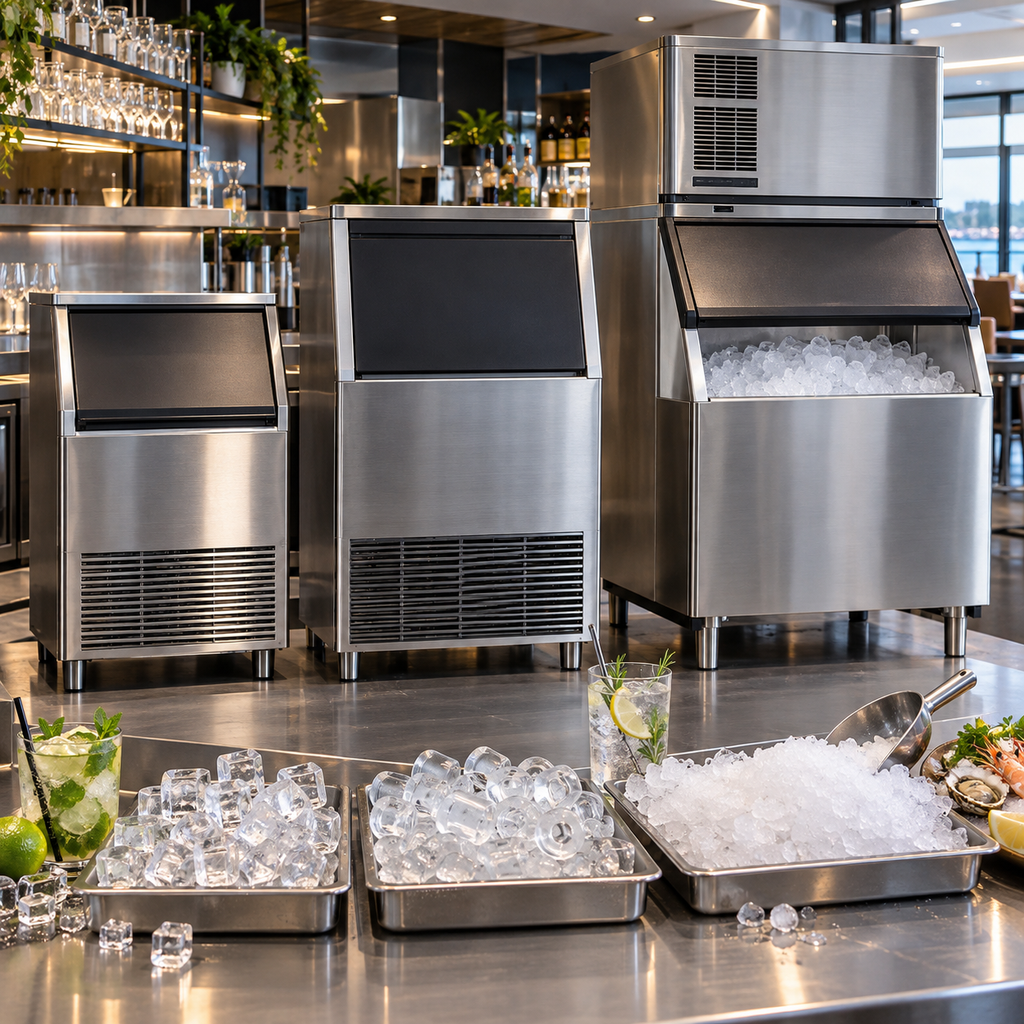
Hoshizaki vs Bromic vs Brema: Comparing Commercial Ice Machines
October 05, 2026
-
-
-
-
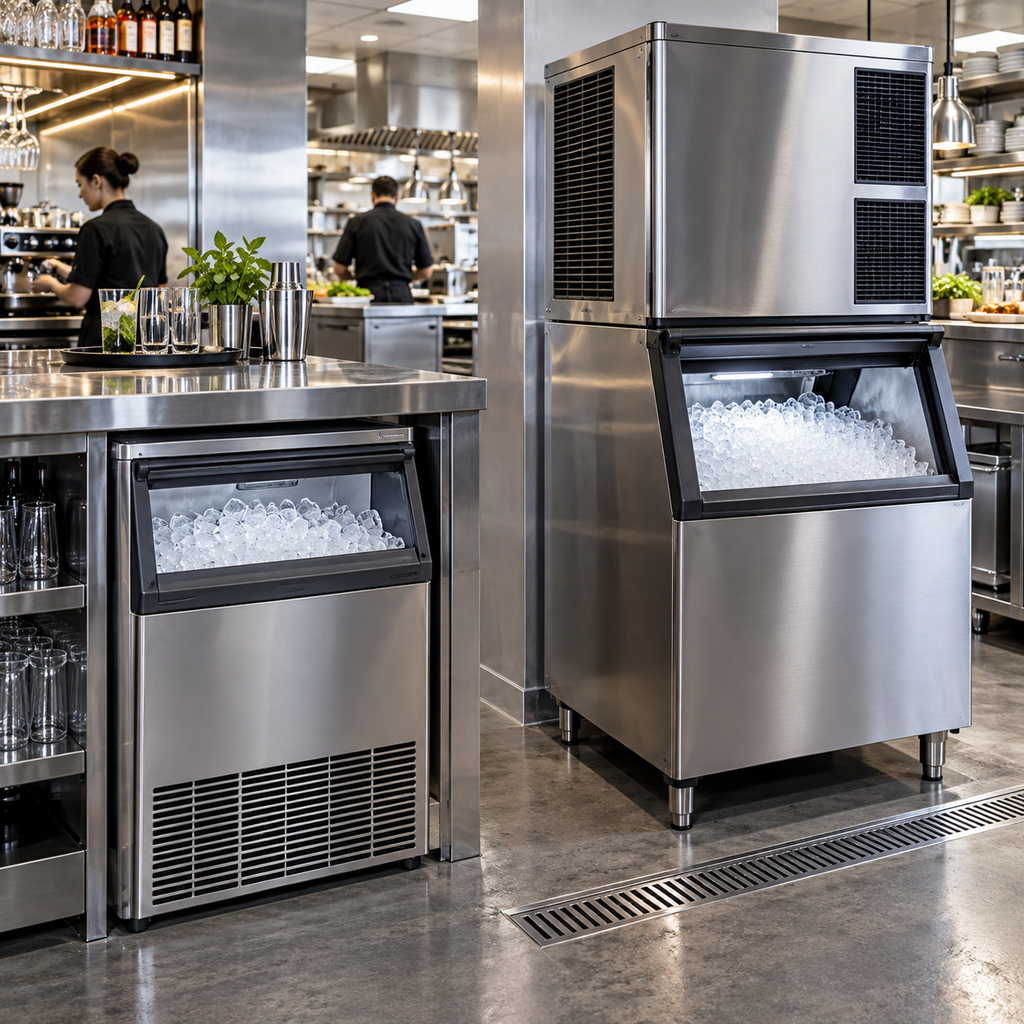
Undercounter vs Modular Ice Machines: Which Setup Fits Your Venue?
October 05, 2026
-