Smarter Commercial Kitchens: Equipment, Workflow & Design That Save
- Aug 08, 2026
- 0 Comments
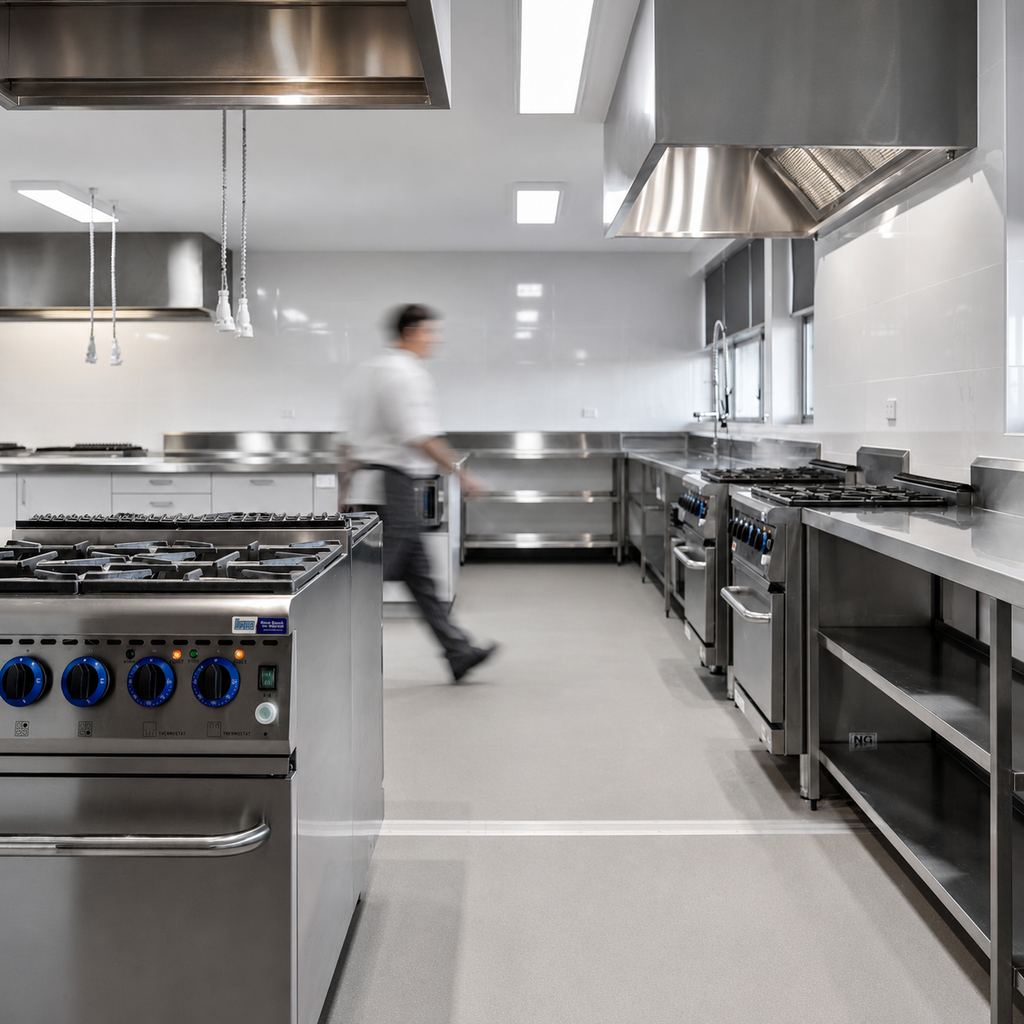
A more efficient commercial kitchen is not created by simply buying faster equipment. The best-performing kitchens bring together workflow, menu requirements, capacity, storage, cooking, refrigeration, warewashing, utilities and service access so that people and equipment can work together with fewer unnecessary steps.
For café owners, restaurant operators, hotels, clubs, caterers and institutional foodservice teams, that matters more than ever. Labour is expensive, energy use is under scrutiny, menus are becoming more flexible and customers still expect fast, consistent service. The right equipment can help, but its value is multiplied when it sits inside a kitchen that has been planned properly from the start.
ICE Group has spent decades designing, creating and constructing hospitality venues, aged-care and educational facilities, as well as supplying and supporting the commercial equipment that keeps those sites operating. That experience has reinforced one simple lesson: efficiency starts with the whole kitchen, not an individual appliance.
Start With Workflow, Not the Equipment List
Before choosing an oven, refrigerator or dishwasher, map how food and people will actually move through the kitchen. A logical sequence generally follows receiving and storage, preparation, cooking, plating or service, and finally warewashing and waste.
The goal is not to make every kitchen identical. A 30-seat café has very different demands from a hotel banquet kitchen, an aged-care production kitchen or a school food-technology facility. What matters is reducing avoidable cross-traffic and putting frequently used equipment where the team needs it.
- Keep high-use refrigeration close to preparation zones.
- Position cooking equipment around the menu and peak service sequence.
- Separate clean and dirty warewashing flows where possible.
- Allow adequate landing space beside ovens, fryers and dishwashers.
- Plan access for cleaning, ventilation and future servicing.
A few unnecessary steps may not sound significant, but repeated hundreds of times during a busy service they quickly become lost labour.
Match Cooking Equipment to Your Menu and Peak Demand
The right cooking line should be selected around what you serve, how much you produce and how quickly you need to recover during peak periods. ICE Group's commercial cooking equipment range covers traditional heavy-duty equipment through to programmable combi steam ovens and specialist countertop solutions.
For venues looking to consolidate cooking processes, brands such as Rational and UNOX offer combi-oven platforms that can handle multiple cooking methods in one footprint, with programmable controls designed to support repeatability. For high-output conventional cooking lines, Goldstein remains a familiar name across Australian commercial kitchens.
The most efficient answer is not automatically the appliance with the longest feature list. A café that mainly grills, toasts and reheats has a different requirement from a restaurant running long à la carte services or a facility producing hundreds of meals to a schedule. Buy around the production task first.
Refrigeration Is an Operating Cost, Not Just a Purchase
Commercial refrigeration works around the clock, so specification decisions continue affecting a venue long after installation. The cabinet that appears cheapest to buy can become expensive if it is oversized, poorly ventilated, difficult to clean or constantly struggling to recover temperature.
When comparing commercial refrigeration, consider usable capacity, door-opening frequency, ambient conditions, ventilation clearances, shelving layout and how close the unit will sit to the preparation area. Brands such as Hoshizaki, Williams and Bromic give operators options across refrigeration, freezing and foodservice applications, while dedicated commercial ice machines should be sized around realistic peak demand rather than average daily use.
Good refrigeration planning also means avoiding heat traps. Condensing units need airflow, doors need room to open properly, and service technicians need access. These details are far easier to solve on a plan than after a kitchen is built.
Don't Let Warewashing Become the Kitchen Bottleneck
A busy service can be slowed just as quickly by a backed-up wash area as by an overloaded cooking line. The correct warewashing system should be chosen around rack throughput, glassware and crockery volumes, pots and utensils, available water treatment, extraction and staffing.
Commercial systems from brands such as Meiko are designed for demanding hospitality and institutional environments, but the machine is only one part of the equation. Infeed benches, pre-rinse position, clean-side landing space, rack storage and the route back to service all affect real-world throughput.

Efficiency example based on manufacturer comparison data for an Electrolux Professional green&clean rack-type dishwasher. Actual results vary by model, operating conditions and load profile.
Modern warewashing technology shows how strongly equipment design can influence utilities. Electrolux Professional, for example, uses features such as energy-saving devices and rinse-water management in its commercial rack systems. The important takeaway for operators is broader: compare lifetime water, energy and chemical use alongside the purchase price.
Australia 2026: Efficiency Is Becoming a Buying Requirement
Australian Equipment Market Snapshot
Industry research from Expert Market Research estimates the Australian commercial kitchen appliances market at A$2.72 billion in 2025 and forecasts it to reach approximately A$4.26 billion by 2035, representing a 4.6% CAGR from 2026–2035.
The same research identifies energy efficiency as an important market driver and cites examples including cooktops that stop energy flow when no pan is detected and newer warewashing systems designed to reduce utilities. View the industry market outlook.

Industry estimate, not an ABS market-size measure. Source: Expert Market Research, Australia Commercial Kitchen Appliances Market Report.
The bigger shift is that operators are increasingly looking for equipment that can do more with fewer manual steps. Programmable and sensor-equipped combi ovens, connected equipment, AI-assisted rostering and production planning, and digital ordering are becoming part of the hospitality toolkit. The objective is not technology for technology's sake; it is to reduce repetitive work, improve consistency and give teams more time for the tasks that need human judgement.
Menu trends are influencing equipment selection too. Steam and combi cooking, high-capacity commercial blenders and flexible multi-mode appliances suit operators who want to add lighter dishes, plant-forward menu items or new dayparts without filling the kitchen with single-purpose equipment.
Small Footprint? Make Every Millimetre Work
Efficiency matters just as much in a small café, kiosk, food truck or compact restaurant kitchen. In fact, limited floor area often makes planning more important.
Compact and modular equipment can allow operators to build production around the available space rather than forcing full-size equipment into a poor layout. Countertop equipment from brands such as Roband, correctly sized refrigeration, underbench storage and custom stainless workstations can all help create usable production capacity without unnecessary bulk.
Custom fabrication becomes especially valuable here. Benches, sinks, shelves, splashbacks and extraction can be configured around the building and equipment instead of relying entirely on standard dimensions. A well-designed 20 square metre kitchen can often work harder than a much larger room with a poor flow.
Design the Kitchen for the People Using It
A technically impressive kitchen is not automatically an efficient one. If chefs constantly cross paths, refrigerated ingredients sit several metres from preparation, clean and dirty dishes intersect, or the most-used appliance is awkward to access, the layout creates friction every day.
Talk to the people who will actually use the space. Where do they reach most often? Which tasks happen simultaneously? What needs to be cleaned between services? Where will hot trays land? Where do delivery cartons arrive? The answers often expose design issues before construction starts.
Ergonomics also matters. Appropriate bench heights, sensible storage, clear working aisles and safe lifting paths help reduce unnecessary fatigue. Efficiency is ultimately about making the work easier to perform correctly.
Proven Across Hospitality, Aged Care and Education
Commercial kitchen design changes significantly by sector, which is why experience across different operating environments is useful. ICE Group and the ICE Group Projects division have worked for decades across hospitality venues, aged-care and healthcare environments, schools and educational facilities, alongside commercial equipment supply, custom fabrication and construction.
The ICE Group Projects portfolio includes restaurant and hospitality work as well as projects such as Warrigal Care Albion Park, Baptist Care and Narooma High School. Each environment brings a different operational brief: restaurant kitchens may focus on fast à la carte service, aged-care kitchens on reliable production and hygiene, and educational facilities on safety, supervision and multiple users.

ICE Group Projects — educational commercial kitchen project at Narooma High School.
That cross-sector experience helps turn equipment selection into a broader conversation about workflow, stainless fabrication, extraction, services, installation, maintenance access and how the space will operate years after handover.
Think Beyond Today's Menu
One of the easiest ways to create an inefficient kitchen is to design only for opening day. Before finalising equipment, consider what may change over the next few years.
- Could breakfast, takeaway or delivery become a larger part of the business?
- Will you add functions, catering or higher-volume production?
- Could the menu become broader or more health-focused?
- Is there enough electrical, gas, water or extraction capacity for future equipment?
- Can equipment be replaced or serviced without dismantling the kitchen around it?
Building in sensible flexibility is usually cheaper than rebuilding a production line after the business grows.
Serviceability Is Part of Efficiency
Equipment that cannot be maintained easily is not efficient, regardless of its specification sheet. Commercial kitchens operate in heat, grease, moisture and long service hours, so access to servicing, warranty support and replacement parts should be part of the buying decision.
ICE Group supports equipment sales with practical industry knowledge and after-sales support, helping operators consider not only what to purchase but also installation requirements and the ongoing service life of the equipment.
Commercial Kitchen Efficiency Checklist
Before committing to a new kitchen, refurbishment or major equipment upgrade, ask:
- Workflow: Does food move logically from storage to preparation, cooking, service and wash-up?
- Capacity: Is equipment sized for peak demand rather than just average trade?
- Utilities: Have energy, water, gas and chemical consumption been considered?
- Space: Can compact or multi-purpose equipment reduce the footprint?
- People: Does the layout reduce unnecessary walking, lifting and cross-traffic?
- Cleaning: Can staff access the areas around and behind equipment?
- Service: Can technicians reach critical components without disrupting the whole kitchen?
- Growth: Is there enough flexibility for future menu or capacity changes?
Build the Kitchen Around the Operation
There is no single formula for the perfect commercial kitchen. The most efficient café, restaurant, hotel, catering kitchen, aged-care facility or school foodservice space is the one designed around its actual production requirements.
Start with workflow. Choose equipment for the menu and peak demand. Treat refrigeration and warewashing as ongoing operating systems, not just purchases. Use technology where it genuinely removes repetitive work. And make sure the room, services and fabrication support the equipment rather than fight against it.
Whether you are replacing one appliance or planning an entire venue, ICE Group can help with commercial equipment selection and practical project planning backed by decades of experience across Australian hospitality and institutional environments.
Planning a commercial kitchen upgrade or new fitout? Talk to the ICE Group team, browse our commercial cooking equipment, or explore completed work through ICE Group Projects.

Recent Posts
-
-
-
From Menu Idea to Busy Service: The Equipment Behind a Kitchen That Works
September 19, 2026
-
-
-
-
One Oven, 200 Plates: The Combi Oven Method for Wedding and Banquet Catering
September 13, 2026
-
-
-
-
Native by Nature: Bringing Wattleseed and Finger Lime Onto Your Menu
September 09, 2026
-