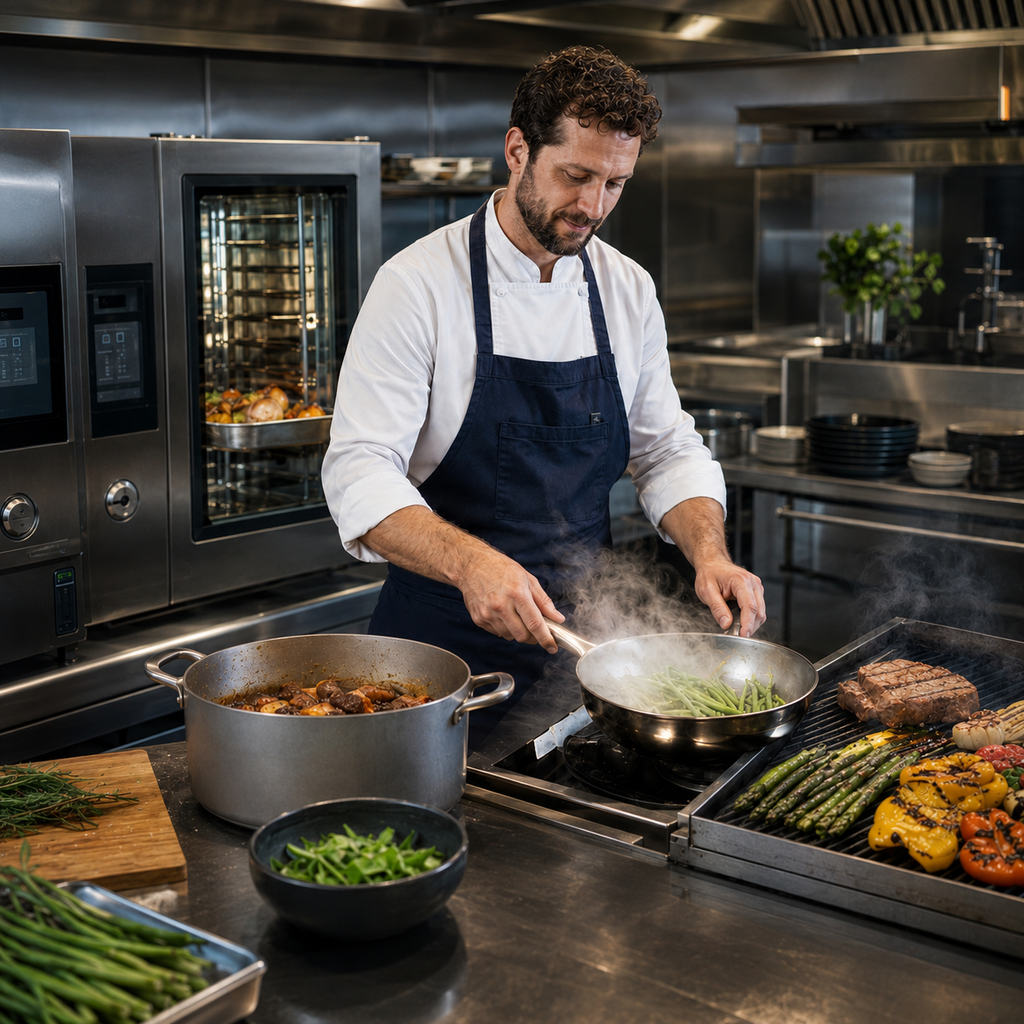
One Oven, 200 Plates: The Combi Oven Method for Wedding and Banquet Catering
- Sep 13, 2026
- 0 Comments
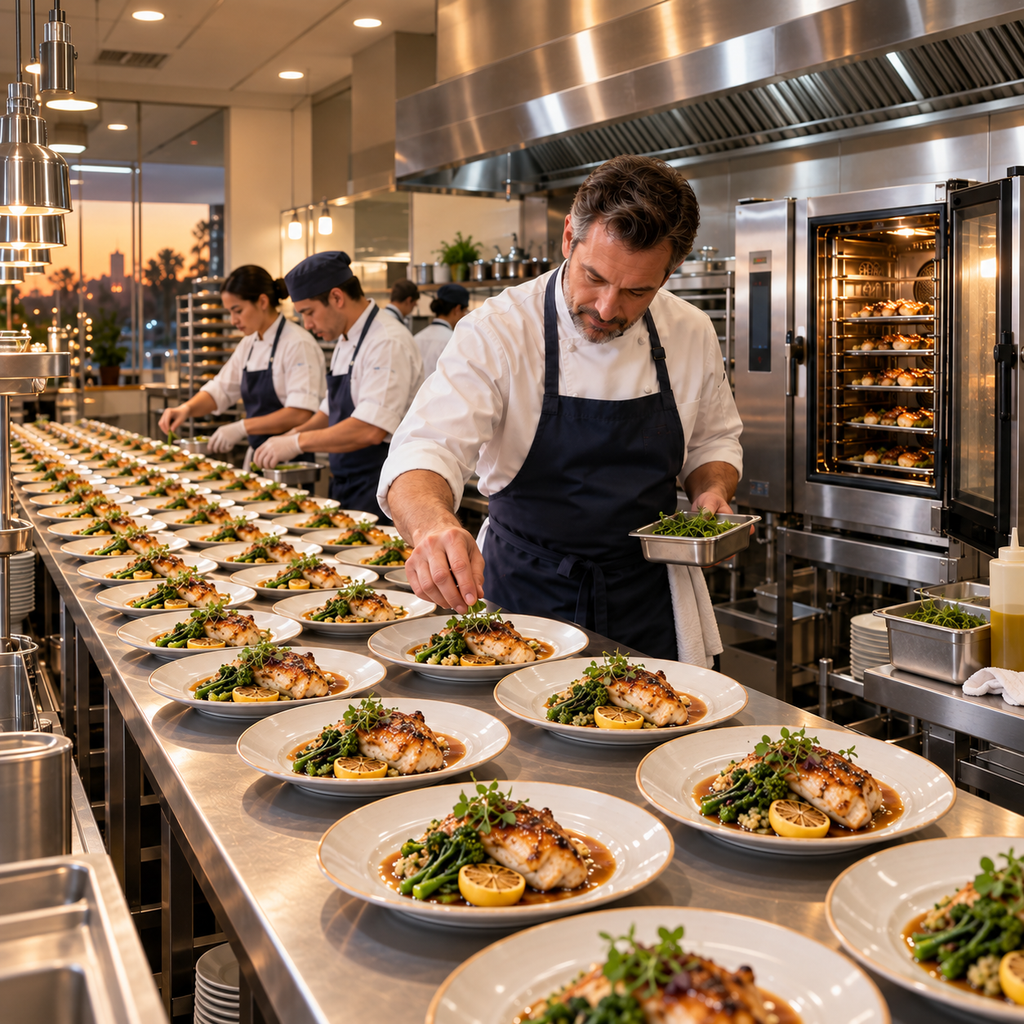
There is a moment in every banquet service when the room goes quiet and the pressure moves to the pass. Two hundred plates need to leave within a narrow service window. Every chicken breast needs to be moist, properly cooked and evenly coloured. Every guest should receive the same standard, whether they are seated at table four or table forty.
That is where a combi oven earns its place. By controlling heat, airflow and humidity in one cooking chamber, it gives a catering team a more repeatable way to manage volume. The real advantage is not simply cooking more food. It is building a production method that can be tested, recorded and repeated when the function calendar is full.

The banquet bottleneck
Large-scale plated service is not difficult because any one plate is complicated. It is difficult because the same plate must be reproduced at speed without quality drifting from the first table to the last.
Traditional pan-based production spreads that pressure across burners, ovens and multiple cooks. Timing becomes harder to control, product loss increases and the pass can quickly become the place where small inconsistencies multiply. A combi oven brings more of the production into a single, controllable process.
It is “How many portions can this kitchen cook, chill, hold, regenerate and plate safely within the service window?”
Why a combi oven changes the workflow
A commercial combi oven combines convection heat with controlled steam. That gives chefs a practical way to manage moisture, colour and core temperature across multiple trays. Modern systems from manufacturers such as RATIONAL and UNOX also support core-temperature monitoring and programmable cooking processes, helping teams reproduce a tested method across different shifts.
For weddings and functions, this also opens the door to a properly managed cook-chill-regenerate workflow. Much of the production can move away from the final service window, leaving the team to focus on finishing, sauce, garnishes and the pace of the pass.
Herb and lemon chicken at scale
Chicken breast is a useful test of a banquet system. It is familiar, widely specified and unforgiving when the cooking process is inconsistent. The quantities below provide a starting point for recipe development. Test the seasoning, yield, tray pattern and cooking program in your own equipment before using it at a live function.
| Ingredient | 10 covers | 50 covers | 100 covers | 200 covers |
|---|---|---|---|---|
| Skin-on chicken breast, 200–220 g | 10 | 50 | 100 | 200 |
| Olive oil | 60 ml | 300 ml | 600 ml | 1.2 L |
| Garlic, crushed | 4 cloves | 20 cloves | 40 cloves | 80 cloves |
| Fresh thyme leaves | 2 tbsp | ⅔ cup | 1¼ cups | 2½ cups |
| Fresh rosemary, chopped | 2 tbsp | ⅔ cup | 1¼ cups | 2½ cups |
| Lemon zest | 2 lemons | 10 lemons | 20 lemons | 40 lemons |
| Salt | 1 tbsp | 5 tbsp | 10 tbsp | 20 tbsp |
| Cracked pepper | 1 tsp | 5 tsp | 10 tsp | 20 tsp |
| Butter, for the jus | 40 g | 200 g | 400 g | 800 g |
| Shallots, diced | 2 | 10 | 20 | 40 |
| Dry white wine | 250 ml | 1.25 L | 2.5 L | 5 L |
| Chicken stock | 500 ml | 2.5 L | 5 L | 10 L |
Production note: linear recipe scaling is only a starting point. Salt, aromatics, pan reduction and cooking yield should be tested at the intended batch size.

The five-stage production method
1. Standardise the preparation
Trim the chicken and group portions by thickness. Pat the surface dry, season evenly and arrange the portions skin-side up in a single layer. Leave enough space for air and steam to move around the product. The correct tray type and loading pattern will depend on the oven, the product and the result you want, so test the complete load rather than assuming a small batch will behave the same way.
2. Preheat and load with purpose
Preheat the combi oven using the manufacturer's recommended program. Load efficiently so the door is not held open for longer than necessary, then place the core probe in the thickest part of a representative breast. Avoid bone, pockets of fat and direct contact with the tray.
3. Control moisture and core temperature
Use a validated poultry program or a tested combination of heat and humidity that brings the load to temperature without excessive surface drying. Time is a useful planning tool, but it should not be the final measure of doneness. The core temperature is what tells the kitchen whether the product is ready.
4. Finish for colour, then verify
Reduce humidity or move into a finishing stage to develop colour and set the herb coating. Verify the thickest pieces with a clean, calibrated probe. NSW Food Authority guidance uses a minimum internal temperature of 74°C for chicken; your venue's approved food-safety program or validated process may set additional requirements.
5. Rest, sauce and plate
Allow a short, controlled rest before slicing or plating. Use the tray juices as the base for a shallot, white wine and chicken-stock jus, reducing separately and finishing with butter. At service, organise the pass around repeatable plate movements: protein, sauce, garnish, final check and dispatch.

Cook-chill and regeneration
For a large wedding, cooking every main course from raw immediately before service is often the least forgiving option. A cook-chill workflow can move production into a quieter window, but only when the cooling, storage and regeneration stages are properly controlled.
Under Australian food-safety guidance, cooked potentially hazardous food should generally be cooled from 60°C to 21°C within two hours, then from 21°C to 5°C within a further four hours. A commercial blast chiller, shallow loading, clear labelling and recorded temperatures help make that process practical at banquet scale.
Requirements can vary with the food, process and state or territory. Build the method into your food-safety program and follow the relevant regulator's guidance.
Multi-tray service checklist
- Cook to a verified core result. Use time for planning and the probe for confirmation.
- Batch by size and thickness. Similar portions are more likely to finish together.
- Respect the rated load. Extra trays are not extra capacity if they prevent even airflow.
- Test a full production load. Document tray type, spacing, program, core result, yield and resting time.
- Plan backwards from the first plate. Include regeneration, resting, plating and travel time to the room.
- Build in a recovery plan. Keep a safe buffer for late speeches, delayed guests or a slower-than-planned pass.
The takeaway
A combi oven does more than add capacity. It gives a banquet kitchen a process it can measure, refine and repeat.
For 200 plates, that control matters as much as speed. The right oven, loading plan and food-safety workflow can reduce pressure at the pass while helping the first and last guest receive the same standard.
Choosing the right capacity depends on menu mix, tray configuration, service volume, utilities and whether the kitchen plans to cook fresh or regenerate. Browse our combi steam oven range, including RATIONAL and UNOX options, or speak with the ICE Group team about sizing a system for function and banquet service.

Recent Posts
-
-
-
One Oven, 200 Plates: The Combi Oven Method for Wedding and Banquet Catering
September 13, 2026
-
-
-
-
Native by Nature: Bringing Wattleseed and Finger Lime Onto Your Menu
September 09, 2026
-