Café Menu Ideas That Work Harder: Five Delicious Dishes for Smoother Service
- Oct 04, 2026
- 0 Comments
A full docket rail can expose a menu that asks too much of a small kitchen. One table wants breakfast, another wants lunch, and three dishes need the same piece of equipment at once. Meanwhile, the fridge holds ingredients bought for specials that barely sold. The problem may sit in the menu before it reaches the pass.
The most useful café menu ideas combine appetite appeal with a practical production plan. For café and restaurant owners, that means dishes customers want to order, ingredients that earn their space and preparation the team can repeat. A focused selection of toast, melts, bowls and baked dishes can offer variety while sharing the work behind the scenes.
Start with the service pressure
Before introducing a new dish, watch your busiest service. Note where orders wait, which ingredients require repeated trips and which tasks depend on one experienced cook. A popular sandwich can still slow everything down if every order involves slicing, spreading and searching for containers.
Review sales alongside preparation time, ingredient waste and customer feedback. Keep strong sellers, investigate slow movers and question dishes carrying several ingredients used nowhere else. A smaller menu is only useful when the remaining choices suit your customers and your kitchen.
Build one useful prep list
Begin with a compact group of components: roast pumpkin, sautéed mushrooms, spinach, feta, pickled onion, lemon dressing and a cooked grain. Add sourdough, eggs and a clearly portioned chicken option. These ingredients can move between breakfast, lunch and an early evening plate without every dish tasting identical.
Give each component a preparation specification, portion size, storage location and replenishment level. Shared ingredients help when their flavour, texture and shelf life suit each dish. They do not justify carrying food beyond its safe life or turning yesterday’s unsold plates into tomorrow’s special.

Five delicious café menu ideas built for service
1. Roast pumpkin and whipped feta toast
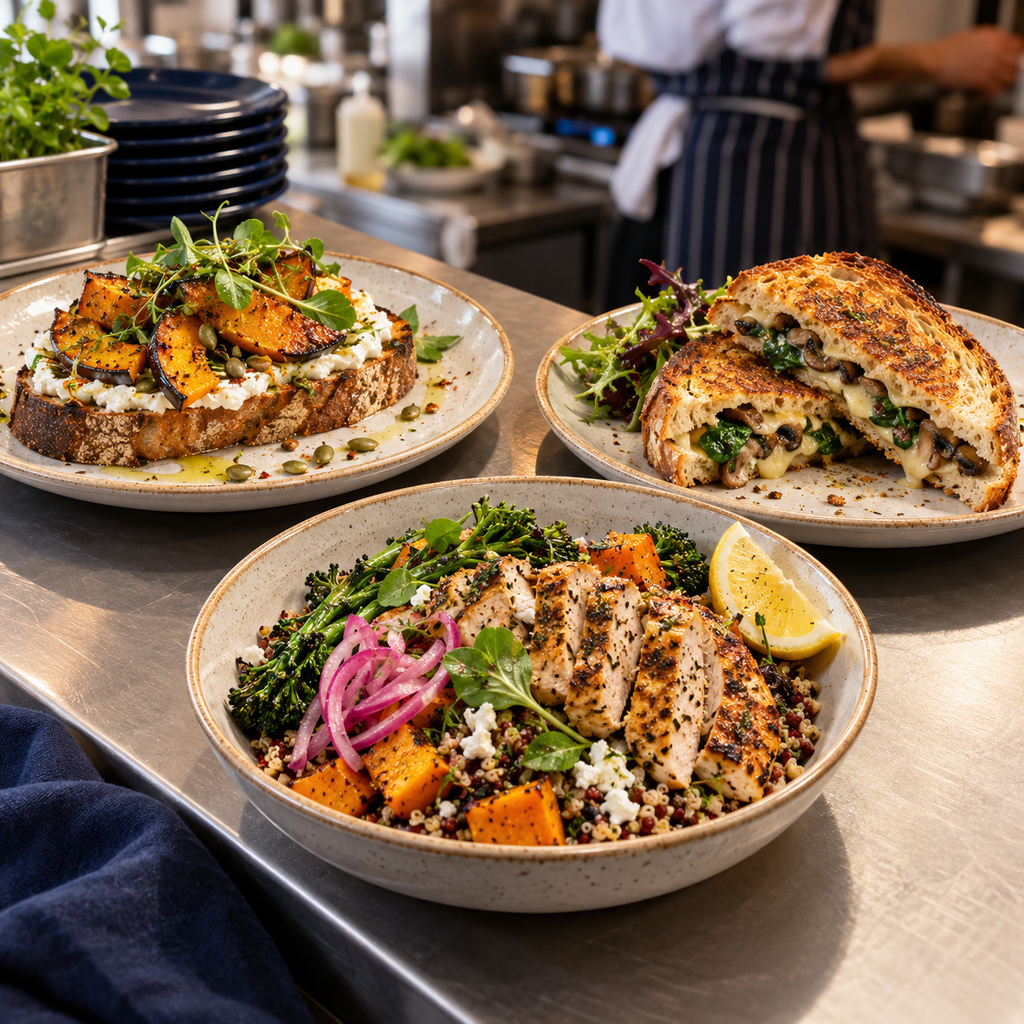
Layer caramelised pumpkin over whipped feta on toasted sourdough, then finish with pepitas, lemon zest and fresh herbs. Sweetness, salt, crunch and acidity give a familiar format a distinctive finish.
Roast the pumpkin in planned batches and set a consistent cut size. Portion the feta and garnish before service, then toast and assemble to order. The pumpkin also supports the bowl and frittata below, helping one preparation task serve several menu items.
2. Mushroom, spinach and cheese melt
Fill sourdough with browned mushrooms, spinach and a measured amount of melting cheese. Serve with pickled onion or a small dressed salad for freshness against the rich filling.
Control moisture in the mushrooms and spinach before assembly so the bread stays crisp. Test bread thickness, filling weight and the complete heating process on your press. A generously filled sandwich still needs an evenly heated centre and a finish the team can reproduce.
3. Lemon-herb chicken grain bowl
Combine a cooked grain with roast pumpkin, leafy greens, sliced lemon-herb chicken and pickled onion. Finish with a bright herb dressing and a small scattering of seeds. The result feels substantial without relying on a heavy sauce.
Set the protein portion and assembly sequence clearly. Keep dressing separate until finishing, and offer a chickpea alternative if demand supports another prepared component. Confirm ingredients and handling before making any dietary or allergen claims.

4. Pumpkin, spinach and feta frittata
A golden frittata with visible vegetable pieces offers a different texture using familiar ingredients. Serve a defined slice with salad and a little relish for a straightforward breakfast or lunch option.
Standardise tray depth, ingredient distribution and portion size. Test cooking, cooling, storage and reheating as one complete process before adding it to the menu. If displayed for sale, use equipment and procedures suited to the required holding conditions.
5. Warm roast vegetable and grain plate
Bring pumpkin, mushrooms and grains together with greens, lemon dressing and crumbled feta. Give it a distinct identity through the balance of warm vegetables, fresh leaves and sharp dressing, rather than presenting the chicken bowl with something missing.
This can suit a restaurant lunch or café all-day menu. Keep the final assembly simple and adjust the vegetables seasonally after checking yield and preparation time. A supplier substitution should not quietly change the portion cost or cooking method.

Match the equipment to the workflow
Map preparation, cooking, chilled storage and finishing before buying equipment. Commercial food preparation equipment can support repeatable cutting and mixing, but the useful capacity is the batch your team actually needs.
For roasting and baking, assess commercial combi ovens against tray size, loading pattern and the rest of the menu. For melts, compare sandwich presses and contact grills by usable cooking area, recovery and cleaning access. Count what fits during the rush, not simply the number of appliances on the bench.
Position commercial refrigeration around safe replenishment and easy access. Batch preparation also needs a verified cooling method. FSANZ guidance requires cooked potentially hazardous food to cool from 60°C to 21°C within two hours, then to 5°C within a further four hours, unless an alternative safe process is demonstrated. Record the actual food temperatures; a fridge setting alone does not verify cooling.
Write a short service card for each dish with a clear finished photograph, portion weights and the order of assembly. Keep it where staff can use it, and brief front of house on the ingredients and available variations. When everyone understands the same plate, substitutions, training and handovers become easier to manage, especially when the owner is away from the kitchen during service.
Measure what earns its place on the menu
Trial the dishes across representative services and record orders, preparation time, ticket delays, waste and returns. Cost the full portion, including dressing, garnish and takeaway packaging. Review contribution after ingredient cost alongside labour demand, rather than judging a dish by its selling price alone.
Keep a simple waste record showing what was discarded and why. Overproduction calls for different preparation quantities; trimming losses may need a different cut; unfinished plates may suggest an oversized serve. Change one variable at a time so the team can see whether the adjustment helps.
The takeaway
A menu works harder when its dishes share useful preparation while giving customers clear choices. Start with flavour, test the service method and let real sales guide the next adjustment. Five well-executed dishes can make a stronger impression than a long list the kitchen struggles to deliver.
Build a menu your kitchen can deliver
Bring your menu, peak orders and available space to ICE Group. We can help you explore equipment that supports the way your team prepares, cooks and serves.

Recent Posts
-
-
-
From Menu Idea to Busy Service: The Equipment Behind a Kitchen That Works
September 19, 2026
-
-
-
-
One Oven, 200 Plates: The Combi Oven Method for Wedding and Banquet Catering
September 13, 2026
-
-
-
-
Native by Nature: Bringing Wattleseed and Finger Lime Onto Your Menu
September 09, 2026
-