A coffee station can have a capable espresso machine and still struggle at the morning rush. The cause is often the full workflow: order mix, grinder speed, milk preparation, bench space, water and the number of people sharing the station.
Plan the equipment around your busiest service period, then match the machine and brewing format to the drinks your customers actually order.

Start with the busiest 30 minutes
Daily coffee totals help with stock planning, but they do not tell you whether the station can handle a queue. Record the busiest half-hour and note how many drinks are espresso-based, how many need steamed milk, and whether customers also order batch-brewed or percolated coffee.
Include the number of baristas working at once and the time needed to grind, extract, steam, finish and hand over each drink. This gives you a more useful capacity picture than a daily cup estimate alone.
Use a short service log over several representative days. Note order times, drink types and any queue build-up, including the difference between weekdays and weekends. This helps separate a genuine equipment constraint from a temporary rush, a staffing gap or a menu item that takes longer to prepare.
Map the coffee workflow from order to handover
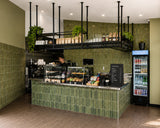
Watch how staff and customers move through the coffee area. A practical sequence is order, grind, extract, prepare milk or other ingredients, finish the drink and hand it over. Bottlenecks often appear where two tasks compete for the same bench space or where cups, milk and grinders sit outside easy reach.
- Allow clear working room around the espresso machine and grinders.
- Keep milk, cups and frequently used tools within the barista’s normal reach.
- Separate customer pickup from the area where drinks are being prepared.
- Check that more than one staff member can work without blocking access.
For venues serving both espresso and brewed coffee, plan where the second format sits so it supports service instead of interrupting the espresso workflow.
Think about replenishment as well as preparation. Staff should be able to restock cups, beans and milk without crossing the customer collection point or blocking another barista. A clear place for used jugs, knock boxes and waste also keeps the bench safer and easier to clean during a busy shift.
Choose brewing formats around the menu
Espresso machines suit made-to-order drinks such as espresso, flat whites, cappuccinos and lattes. They need a matching grinder, trained operators, suitable water treatment and enough room for milk preparation.
Percolators and batch-brew equipment suit service where customers need black coffee ready in larger quantities, such as breakfast, meetings, functions or self-service areas. They follow a different workflow from espresso and should be assessed around batch size, refill frequency, holding arrangements and access to water and power.

Consider how the coffee menu changes through the day. A breakfast venue may need fast black coffee service early, while a café may rely on espresso and milk drinks throughout the day. Events and functions can create short bursts of demand that differ from normal trade. Matching the brewing method and batch size to these service patterns can reduce waiting and avoid preparing more coffee than the team can serve fresh.
Choose the format that matches the service, then confirm the model’s specifications. A larger vessel or an extra group does not, by itself, guarantee a particular number of cups per hour.
Size the espresso machine for peak demand
Two-group machines suit many cafés and restaurant coffee stations. A three-group model can provide more simultaneous brewing positions for a higher-volume service, but it also takes more bench space and may have different service requirements.
Compare group size alongside grinder capacity, steam demand, barista numbers, available bench width and the number of orders that arrive together. For a direct comparison, use the commercial coffee range and group finder to assess the current options, then ask an equipment specialist to review your expected peak workflow.
Plan utilities, cleaning and service access early
Before ordering, confirm the electrical supply, water connection, drainage, filtration, machine clearances and delivery access for the exact model. Requirements vary, so check the manufacturer’s specifications and have the site services assessed before installation.
Also consider daily cleaning and routine maintenance. Baristas need room to reach the machine, remove and clean components, manage grounds and keep the station organised during service. A setup that is easy to maintain is more likely to stay consistent across shifts.
Include the space below and behind the bench in the site check. Filters, pumps, bins and stored supplies can compete for room, and service technicians need practical access to inspect and maintain equipment. Confirm clearances against the selected model’s installation guidance before finalising cabinetry or plumbing.

A practical pre-purchase checklist
- What is the busiest 30-minute period, and how many drinks arrive together?
- What share of the menu is espresso, milk-based coffee and bulk black coffee?
- How many trained staff members will share the station?
- Will the grinders, machine, milk and cups fit the available bench space?
- Are power, water, drainage, filtration and delivery access confirmed?
- Can staff clean and service the setup without disrupting the next shift?
Once these questions are answered, compare suitable models and brands against your menu and venue requirements. Browse the Commercial Coffee Machines collection, compare commercial coffee grinders, or speak with an ICE Group equipment specialist about the setup.